
Technology · The American Take
AI Is Getting Powerful Faster Than the Rules Are Getting Clear
The serious policy question is no longer whether advanced AI needs testing. It is how to create testing that improves safety without freezing innovation.
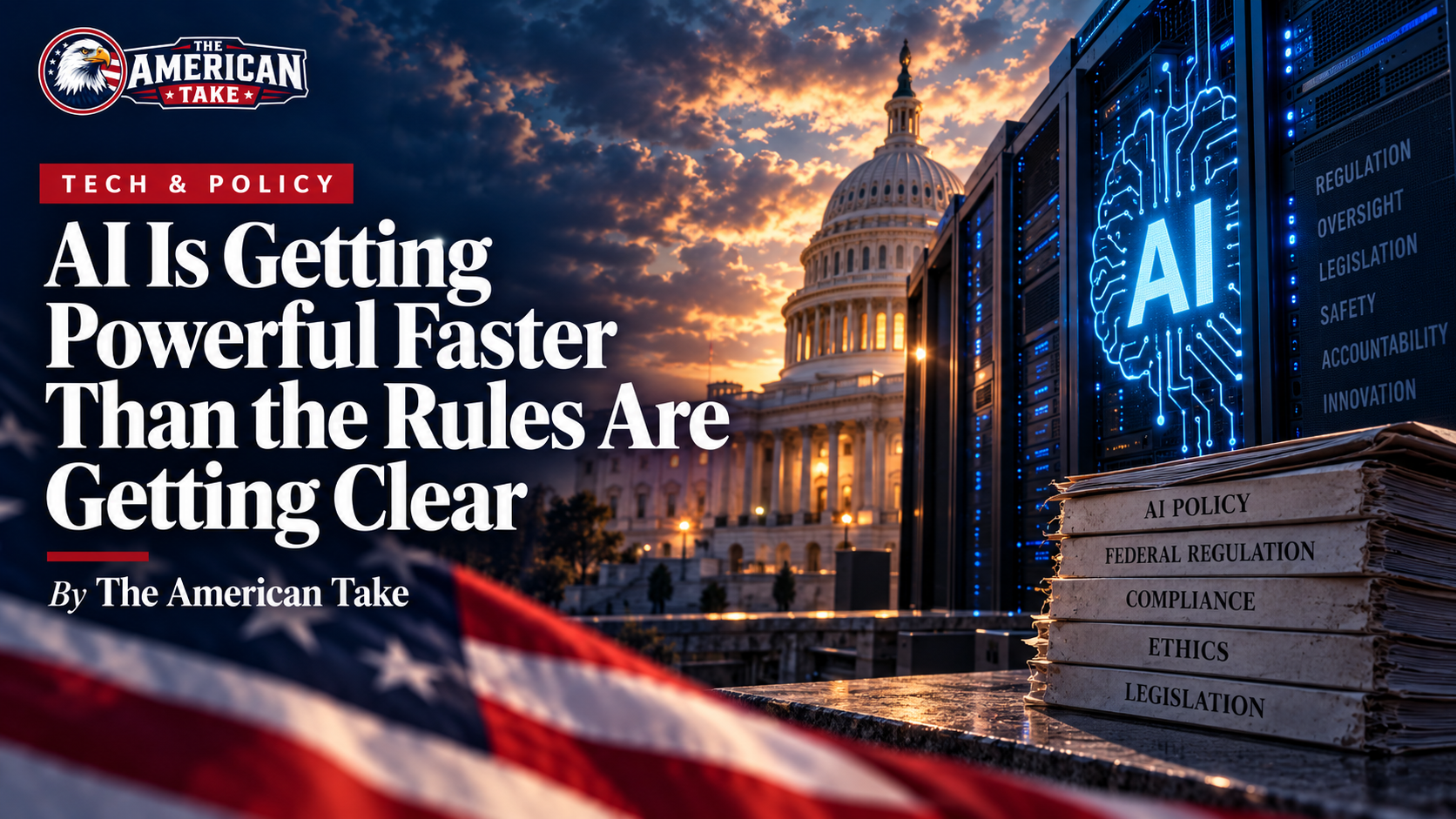
Artificial intelligence has moved beyond the phase where the biggest public concern is a chatbot making an embarrassing mistake. Advanced systems can write and execute code, operate tools, search complex information environments and increasingly act with less direct supervision.
That is why the debate over AI testing is becoming more concrete. One proposal gaining attention is to borrow a principle from drug regulation: before a high-risk product reaches the public at scale, developers should have to demonstrate that they understand its capabilities, failure modes and safeguards.
The analogy is imperfect. Software can be modified instantly, distributed globally and repurposed in ways a pharmaceutical product cannot. A rigid licensing regime could lock in the largest companies and make it harder for smaller competitors and open-source researchers to participate.
But the opposite extreme is also weak. “Move fast and fix it later” becomes a less convincing philosophy when systems can attack networks, manipulate users or automate decisions at enormous scale. Self-regulation is useful, but it is not the same thing as independent verification.
The practical middle ground is risk-based testing: stronger requirements for systems with greater autonomy, access to sensitive tools or demonstrated cyber capabilities, and lighter requirements for low-risk applications. Good rules should make dangerous deployment harder without making ordinary innovation impossible.
 A product of The American Take · Essential context. Deeper insight. A clearer view ahead.
DIRECT. SIMPLE. YOUR INBOX.
One email. No middleman.
No algorithm deciding whether you hear from us. No social platform standing between you and The American Take. Just The Personal Daily Brief, sent directly.