
Current Events · The American Take
NOT A HOAX: Illegals Charged After Voting in US Elections
Federal charges document specific alleged unlawful votes, while the broader scale remains a separate factual question.
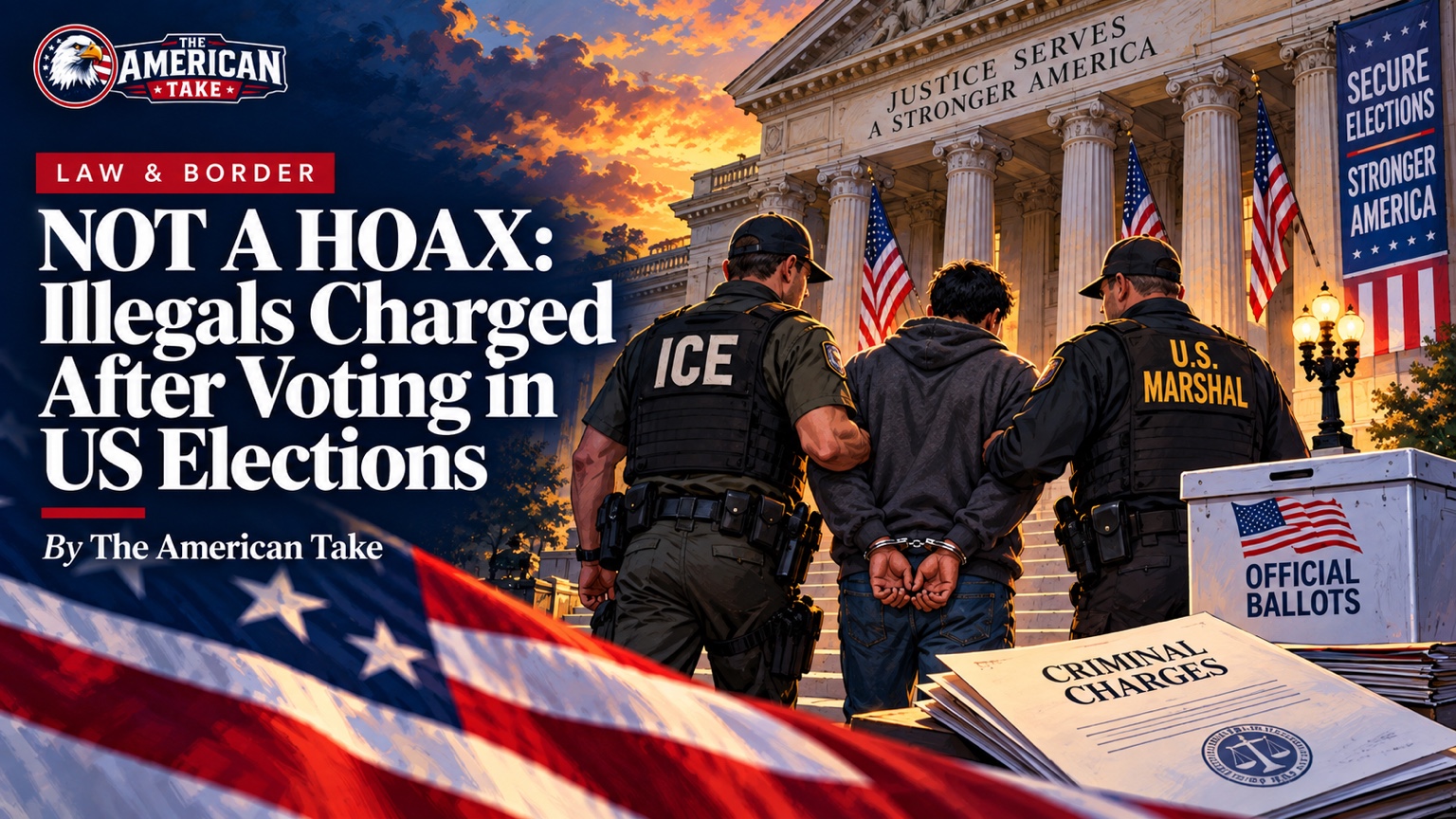
Federal prosecutors have charged people with illegally voting in U.S. elections, and that narrow, verifiable fact is the heart of this story. In January, the U.S. Attorney’s Office in New Jersey announced charges against two men it described as noncitizens for allegedly voting in a federal election. The Department of Justice said each defendant was charged under a federal statute that bars noncitizens from voting in federal elections. A charge is an allegation, not a conviction, and both defendants are presumed innocent unless guilt is proved in court.
The announced cases matter because election debates often combine several different propositions. One is whether noncitizens may lawfully vote in federal elections. Federal law generally says they may not. Another is whether investigators have found individual alleged violations. The Justice Department announcement is evidence that prosecutors have brought such cases. A third, separate proposition is whether those cases show a broad national pattern capable of affecting elections. The filing of individual charges does not by itself answer that larger question.
The public release described a normal criminal process: investigators identify alleged conduct, prosecutors bring a charge, and a court decides the case. The word “charged” is therefore material. It describes what the government has done procedurally without declaring a defendant guilty. It would be inaccurate to turn the cases into a finding of adjudicated liability before the evidence is tested through the adversarial process.
Election administration has several layers: voter registration records, citizenship attestations, state list-maintenance practices, local poll procedures, and criminal enforcement. None makes every error or alleged violation impossible. When authorities identify a potential unlawful vote, they must determine the relevant person, citizenship status, election, registration history, and intent. Facts can differ sharply from case to case, so reporting should identify the actual jurisdiction and allegation rather than rely on a generalized claim.
Reuters reported in January that federal charges for noncitizens voting have historically been limited in number, including 129 people charged federally in the period it reviewed. That context does not erase or excuse the allegations in New Jersey. It does mean that individual cases should not be presented as standalone proof of a pervasive, outcome-changing national problem. Reliable conclusions about prevalence require evidence that measures prevalence.
The precise takeaway is both stronger and more responsible than rhetoric. Specific people have been charged after allegedly voting in U.S. elections; those cases are real and must be resolved in court. The available record does not allow this article to infer how common such conduct is nationwide or whether it altered an election result. What the record does show is a documented charge, not a conviction, and particular cases, not proof of a broader pattern.
Finally, the wording used in public discussion deserves attention. “Illegals” is the everyday term, but this article uses the legally specific term “noncitizen” when describing the federal statute and the defendants. That precision keeps a political label from obscuring the actual legal question. Election integrity depends on accurate records, enforceable rules, and public claims that match the available evidence. A prosecution can be reported plainly without either dismissing it or inflating it. The case will produce a clearer result when the court resolves it, and any future update should report that result with the same distinction between allegation, proof, and broader inference.
 A product of The American Take · Essential context. Deeper insight. A clearer view ahead.
DIRECT. SIMPLE. YOUR INBOX.
One email. No middleman.
No algorithm deciding whether you hear from us. No social platform standing between you and The American Take. Just The Personal Daily Brief, sent directly.