
Current Events · The American Take
After Noncitizen Voting Cases, ICE May Be At Polls
Election officials in several states are preparing for the possibility of federal immigration agents near polling locations, even as DHS says ICE is not planning operations that target polling places.
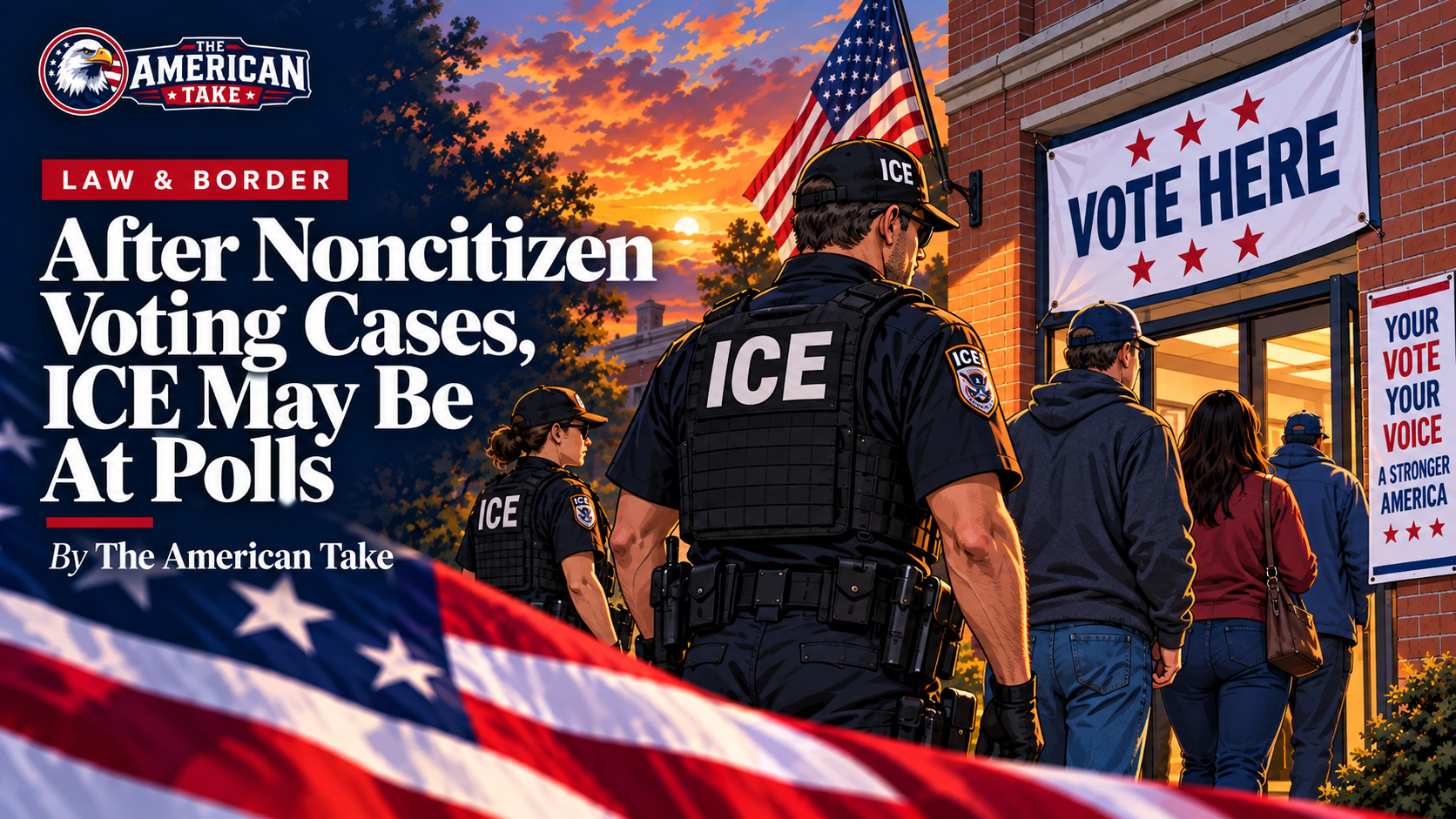
A new election-season fight is developing at the intersection of immigration enforcement and voting: could federal immigration agents appear at polling locations in November?
Election officials in several states are preparing for that possibility, according to reporting by Axios, even though the Department of Homeland Security says ICE is not planning operations that target polling places.
The distinction matters.
There is no confirmed nationwide plan to station ICE agents at voting sites. But state and local officials are taking the possibility seriously enough to develop legal and law-enforcement contingency plans.
Officials in states including Maine, Oregon, Colorado and New Mexico have discussed how they would respond if federal agents appeared near voting locations. Denver officials, for example, have sought legal protection against armed immigration agents appearing at polling sites and are developing identification and de-escalation procedures.
The concern did not appear out of nowhere.
Earlier this year, senior administration officials repeatedly declined to give an absolute guarantee that federal immigration agents would never be near a polling place. Acting Attorney General Todd Blanche said he would follow federal law when questioned about the issue. A DHS spokesperson later told Axios that ICE is not planning operations targeting polling locations, while leaving open the possibility of a targeted enforcement action if an active public-safety threat were involved.
Federal law places strict limits on the presence of armed federal personnel at polling places, and voter-intimidation laws remain in force.
That legal framework is now colliding with another set of headlines: federal prosecutions alleging illegal voting by noncitizens.
The Justice Department recently announced several cases in Texas and, this week, charged a Nigerian national in Massachusetts with unlawfully voting in the 2022 midterm elections. Prosecutors also allege that she voted in the 2024 presidential primary.
Those cases do not establish that noncitizen voting occurs at a scale capable of determining national election outcomes. They do, however, provide concrete examples of conduct that federal prosecutors say violated election law.
That creates a politically combustible situation.
Supporters of aggressive election-integrity enforcement can point to actual prosecutions and ask why federal authorities should be prevented from enforcing immigration or election laws where legally permitted. Voting-rights advocates counter that the visible presence of armed immigration agents around polling places could intimidate eligible voters, including U.S. citizens in mixed-status families.
Both questions will become more urgent as the midterms approach.
For now, the factual picture is this: ICE says it is not planning operations aimed at polling locations. State election officials are nevertheless preparing for the possibility that federal agents could appear near voting sites under some circumstances. And the legal boundaries around what federal officers may do at or near polls are likely to be tested if such an encounter occurs.
The next major development may not come from Washington at all. It could come from a courthouse, a state attorney general, or a single polling location where federal officers appear and local officials decide that their presence crosses a legal line.
Until then, “may be at polls” is exactly what the evidence supports: possible, contested, and being actively planned for—not a confirmed deployment.
 A product of The American Take · Essential context. Deeper insight. A clearer view ahead.
DIRECT. SIMPLE. YOUR INBOX.
One email. No middleman.
No algorithm deciding whether you hear from us. No social platform standing between you and The American Take. Just The Personal Daily Brief, sent directly.