
Current Events · The American Take
ALERT: Attack Shuts Down Major Oil Pipeline As Prices Set to Surge
Saudi Arabia temporarily shut its critical East-West pipeline after attacks, threatening a key route that bypasses the Strait of Hormuz as oil and diesel markets are already under severe pressure.
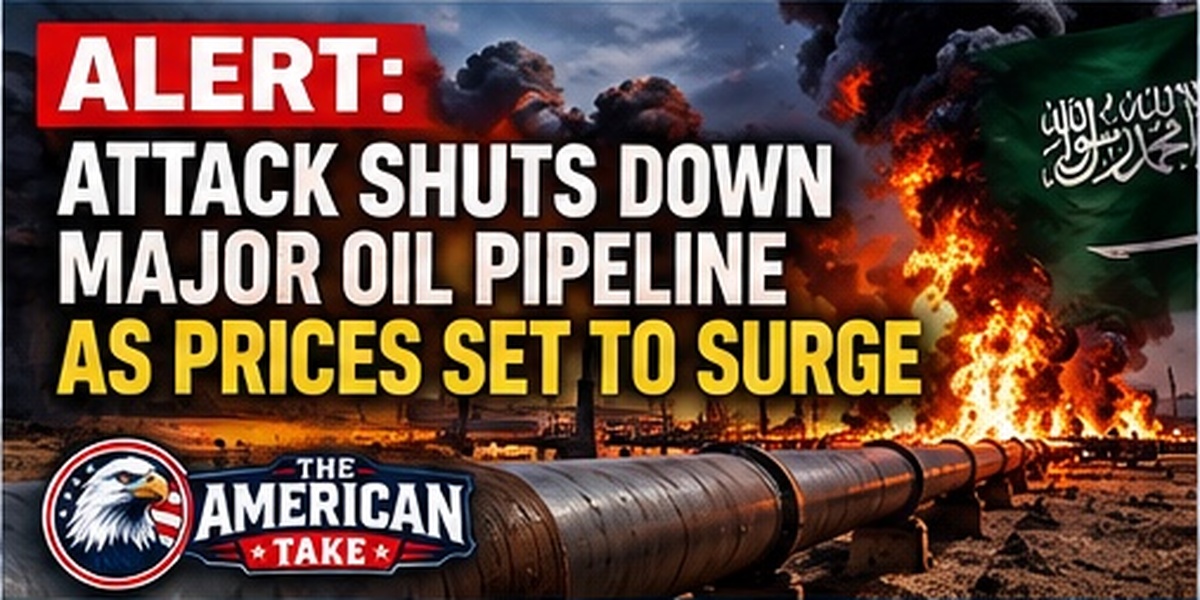
Saudi Arabia temporarily shut its East-West oil pipeline after attacks in the Riyadh and Medina regions, putting fresh pressure on one of the most important alternative oil routes in the Middle East.
The pipeline matters far beyond Saudi Arabia. It can move crude from the kingdom’s eastern production areas to the Red Sea, allowing exports to avoid the Strait of Hormuz when that waterway is disrupted. With Hormuz already under strain, losing even temporary access to the East-West route removes part of the region’s safety valve.
Saudi state media said people were injured and received medical treatment. The kingdom’s initial announcement did not publicly assign responsibility. President Donald Trump later said he believed Iran was probably responsible, but he did not publicly present evidence establishing that attribution.
The timing could hardly be worse for energy markets. Reuters reported Brent crude finished Friday at $104.61 a barrel and West Texas Intermediate at $100.05, with both benchmarks posting large weekly gains. U.S. diesel has also moved above $6 a gallon. That does not guarantee another immediate jump, but the pipeline shutdown adds a new supply risk while traders are already pricing war, restricted shipping and refinery stress into fuel.
For American consumers, the transmission path is straightforward: more risk around oil infrastructure can mean higher crude and diesel costs, which then reach trucking, agriculture, air travel and household prices. The duration of the shutdown—and whether further infrastructure is hit—will determine how much of that risk becomes reality.
 A product of The American Take · Essential context. Deeper insight. A clearer view ahead.
DIRECT. SIMPLE. YOUR INBOX.
One email. No middleman.
No algorithm deciding whether you hear from us. No social platform standing between you and The American Take. Just The Personal Daily Brief, sent directly.