
Current Events · The American Take
Feds Announce Yet Another Noncitizen Voting Case
Federal prosecutors in Massachusetts have charged a Nigerian national with unlawfully voting in the 2022 midterms and allege she also voted in the 2024 presidential primary.
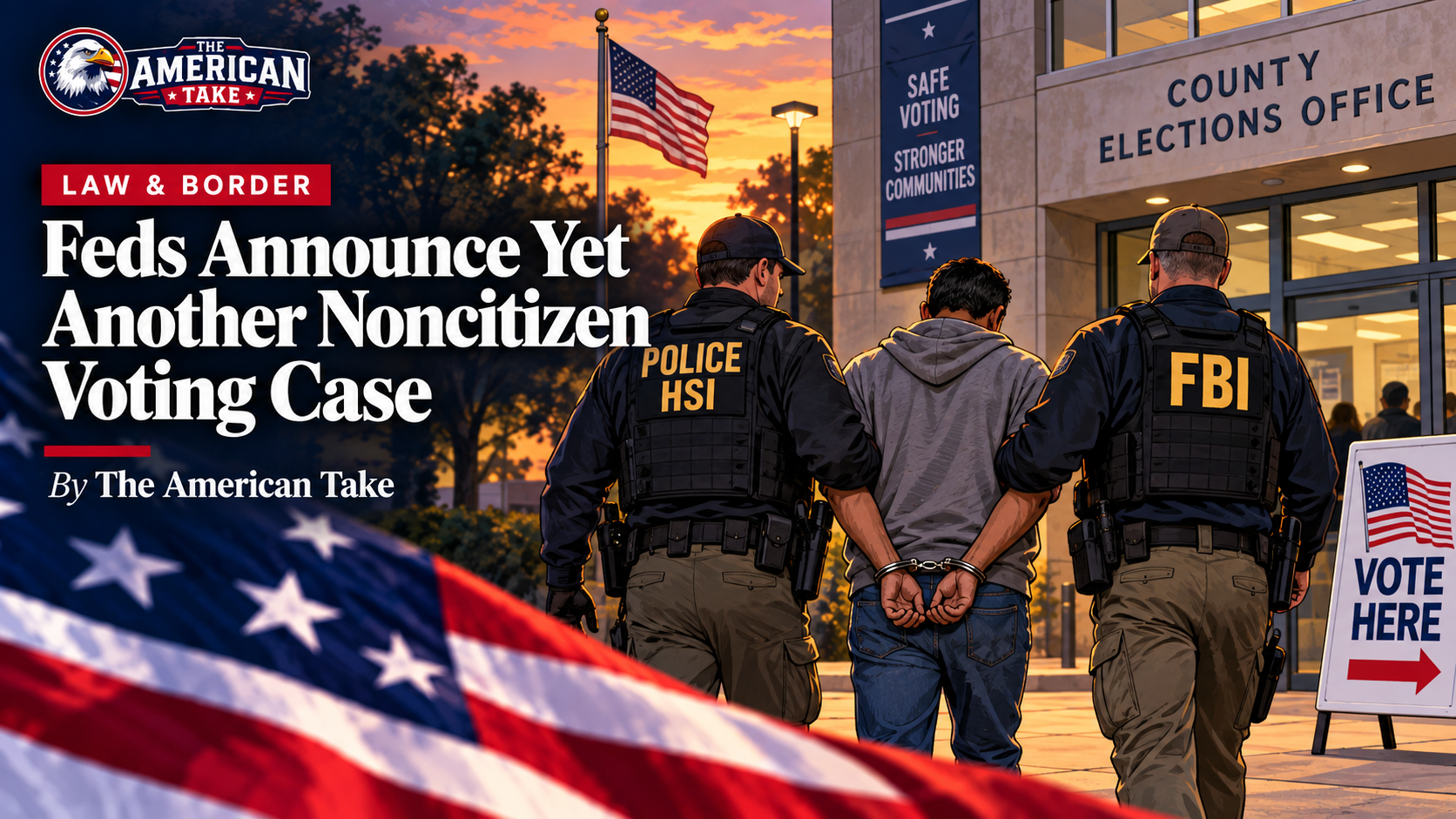
Federal prosecutors have announced another case involving an alleged noncitizen vote in a U.S. election, this time in Massachusetts.
The U.S. Attorney’s Office for the District of Massachusetts said Wednesday that Gladys Adaeze Okafor, a 56-year-old Nigerian national living in Lynn, was arrested and charged with unlawfully voting as an alien. Prosecutors say she voted in the 2022 midterm elections and also allege that she voted in the 2024 presidential primary.
According to the charging documents summarized by the Justice Department, Okafor submitted a voter-registration card in July 2022 and signed a certification stating that she was a United States citizen. The City of Lynn then registered her to vote, and prosecutors allege that she cast a ballot in that fall’s midterm election.
The government says Okafor later submitted another voter-registration form in October 2023, checked the box identifying herself as a U.S. citizen, and signed the citizenship certification. Prosecutors allege that she then voted in the 2024 presidential primary.
The case is significant because it arrives during an intensifying national argument over election integrity, voter-registration safeguards, and how states verify eligibility before ballots are cast.
It also follows other recent federal cases involving alleged illegal voting by noncitizens. Those cases have become flash points in a political debate where one side argues that any documented instance demonstrates a need for tighter safeguards, while voting-rights advocates caution against using individual prosecutions to imply that noncitizen voting is widespread.
What is established in this case is narrower: federal prosecutors have charged one woman with unlawful voting as an alien, and the allegations are now before a federal court.
The Justice Department says Okafor is a citizen of Nigeria who obtained lawful permanent resident status in December 2022. It says she is not a U.S. citizen and has not applied for U.S. citizenship.
If convicted, the unlawful-voting charge carries a maximum penalty of up to one year in prison, one year of supervised release and a $100,000 fine. The government also says she could face deportation after any sentence is completed.
The investigation was announced by U.S. Attorney Leah B. Foley and Jeff Grimming, acting special agent in charge of Homeland Security Investigations in New England. An assistant U.S. attorney in the Major Crimes Unit is prosecuting the case.
The federal complaint remains an allegation. Okafor is presumed innocent unless and until proven guilty beyond a reasonable doubt.
That distinction matters. The case should not be treated as proof of how often noncitizens vote nationwide, and it does not answer the broader policy fight over election administration. But it does establish that federal prosecutors are continuing to bring specific cases alleging that noncitizens registered and voted in American elections.
For voters already watching a growing series of election-integrity prosecutions, that alone will make this latest case difficult to dismiss as a hypothetical concern.
One additional point deserves attention: the alleged 2022 registration happened before prosecutors say Okafor obtained lawful permanent resident status later that year. The government’s theory therefore rests not on a paperwork technicality about citizenship processing, but on the allegation that she affirmatively certified U.S. citizenship when she was not a citizen and then voted. Whether prosecutors can prove that beyond a reasonable doubt will be decided in court, but the documents described by DOJ make the case concrete enough that it will likely become part of the broader national argument over registration verification and election safeguards.
 A product of The American Take · Essential context. Deeper insight. A clearer view ahead.
DIRECT. SIMPLE. YOUR INBOX.
One email. No middleman.
No algorithm deciding whether you hear from us. No social platform standing between you and The American Take. Just The Personal Daily Brief, sent directly.