
Economy · The American Take
New Poll Shows Americans Concerned Economy Is Teetering
Ipsos found more respondents expected worsening national conditions than improvement; that sentiment is not itself a recession forecast.
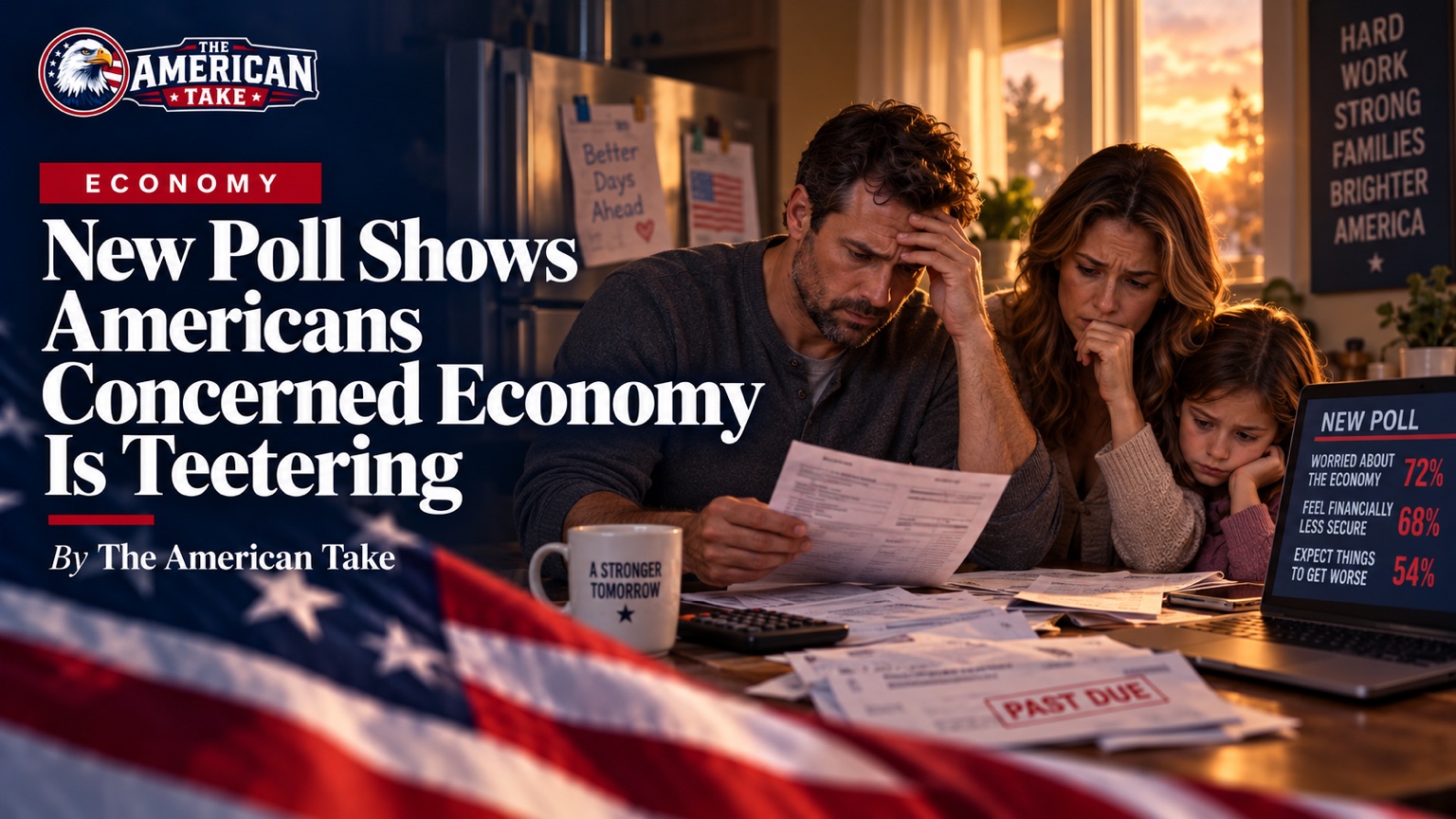
A new Ipsos poll shows widespread concern about the economy: 48% of respondents said they expected the national economy to get worse over the following year, while 20% expected it to improve. That is a measure of public expectation, not a declaration that the United States has entered a recession. Yet it is a substantial reading of anxiety about prices, jobs, borrowing costs, and household plans.
The result is newsworthy because confidence can influence behavior before it is visible in broader official statistics. Consumers who think conditions will deteriorate may postpone a vehicle purchase, a home move, or another large expense. Businesses may become more cautious about hiring or investment. Those decisions can matter even when measures of employment, output, or income are giving a different signal. Here, “teetering” describes respondents’ concern about direction, not a settled macroeconomic diagnosis.
Ipsos is not the only indicator registering unease. Gallup’s Economic Confidence Index was negative 39 in its August reading. The index combines Americans’ evaluation of current conditions with their outlook for the future. It does not prove a single cause for the concern, but it helps show that the Ipsos result is part of a broader pattern of weak confidence rather than a number without context.
Several economic experiences can coexist. Inflation can be below a prior peak while prices remain far above their earlier level. A household can receive wage gains and still feel pressure if rent, insurance, food, or interest payments rise faster than its budget. Expectations about rates can also affect concerns about mortgages, credit cards, and business financing. Polling is not an audited financial statement, but it is evidence about what people say they are experiencing and expecting.
There is important countervailing information. Census-related reporting has shown median household income reaching a record level, and some official indicators have been stronger than consumer sentiment. A pessimistic poll does not prove every economic measure is weak, and one survey does not settle a forecast. Results depend on timing, question wording, and sampling. The responsible reading is that the poll captures a notable level of worry, not that it predicts an inevitable outcome.
The survey directly shows Americans concerned about deterioration. The body provides the necessary precision: the poll describes expectations, and “teetering” is a characterization of that outlook rather than a factual finding of economic collapse. Readers should watch whether the sentiment persists as prices, incomes, jobs, and policy conditions evolve. That is what makes the result a useful snapshot rather than the final word on the economy.
It is also useful to separate concern from certainty. A respondent can be worried about an economy that later improves, just as a confident respondent can be surprised by a downturn. Public sentiment is one input among many, but it can affect political debate and private decision-making in its own right. This article therefore does not use the poll to advise readers toward a political position or a financial action. It reports the result, identifies what it measures, and gives readers the context needed to judge how much weight it deserves.
 A product of The American Take · Essential context. Deeper insight. A clearer view ahead.
DIRECT. SIMPLE. YOUR INBOX.
One email. No middleman.
No algorithm deciding whether you hear from us. No social platform standing between you and The American Take. Just The Personal Daily Brief, sent directly.