
Economy · The American Take
Key U.S. Borrowing Benchmark Crosses 5% as America Braces for Higher Rates and Prices
The 10-year Treasury yield has crossed 5% for the first time since 2023, a market milestone that can feed directly into mortgages, business loans and the cost of financing a heavily indebted government.
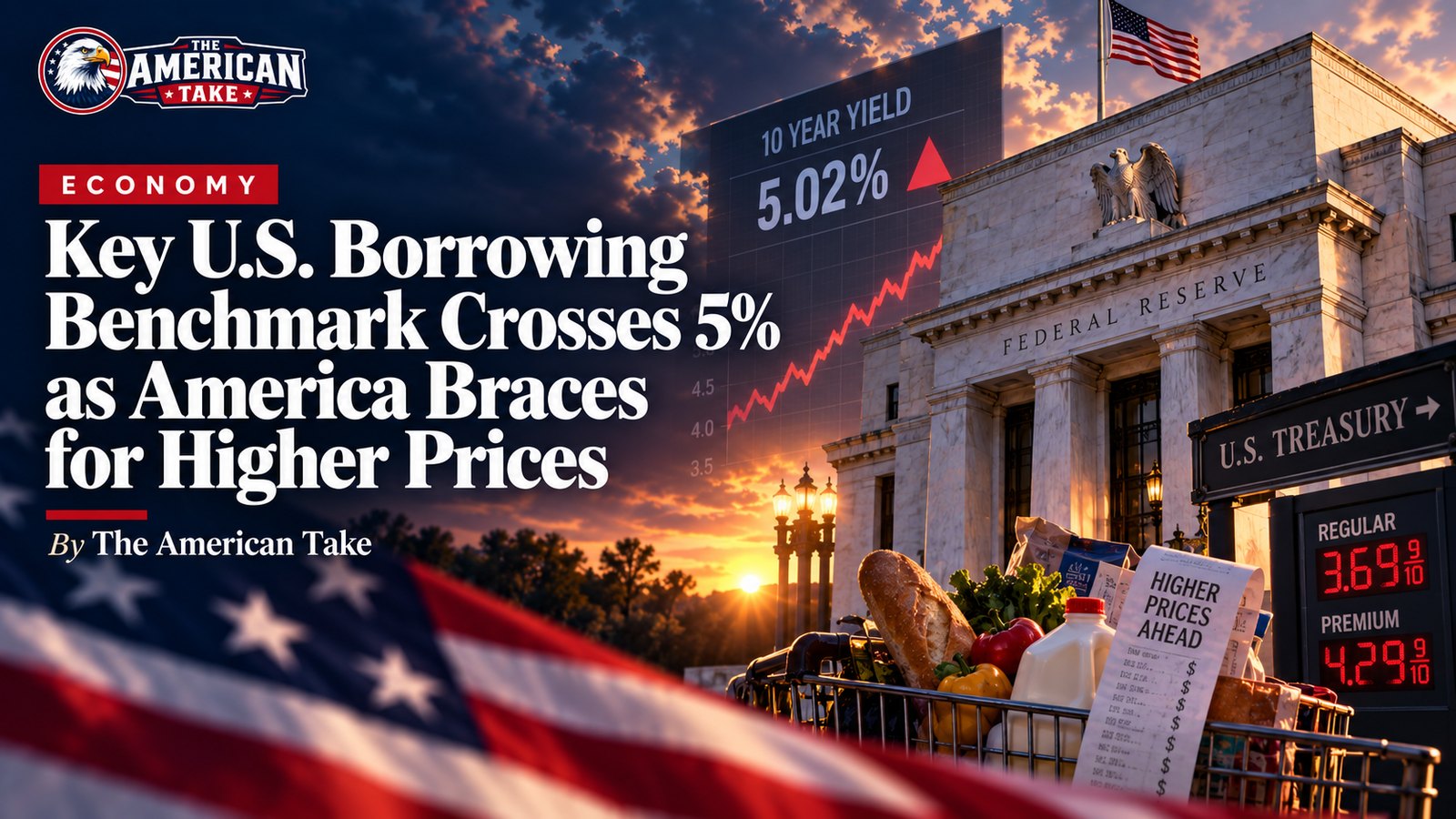
The yield on the benchmark 10-year U.S. Treasury note moved above 5% on Monday for the first time since October 2023, putting one of the most important interest rates in the economy back at a level that can be felt far beyond Wall Street.
The 10-year yield is not an inflation statistic. It is the return investors demand to lend money to the federal government for a decade. But it is heavily influenced by expectations for inflation, Federal Reserve policy, economic growth, bond supply and the government’s fiscal outlook. When investors demand a higher yield, borrowing costs across the economy often rise with it.
That is why the 5% threshold matters to households. Mortgage rates, auto financing, business loans and other forms of long-term credit are influenced by Treasury yields. A family may never buy a Treasury note, but it can still feel the bond market through the monthly payment on a house, a vehicle or a line of credit.
Several pressures are pushing yields higher at the same time. Oil prices have risen sharply, reviving inflation concerns. Markets increasingly expect the Federal Reserve to raise rates at its September meeting. The government is also issuing large amounts of debt, while investors are paying closer attention to persistent federal deficits and the growing cost of servicing the national debt.
There is a second consequence that receives less attention: 5% government bonds compete directly with stocks and other investments for capital. When investors can earn materially higher yields on Treasury securities, some money that would otherwise chase riskier assets may move toward bonds. That can put additional pressure on equities, housing and other rate-sensitive assets.
For Washington, the arithmetic gets harder as well. Higher Treasury yields increase the cost of refinancing federal debt. That does not create an immediate budget crisis, but over time it means a larger share of federal revenue can be consumed by interest rather than defense, infrastructure, tax relief or other priorities.
The most important point for ordinary Americans is that this is not simply a Wall Street milestone. A 5% 10-year yield is a signal that the era of cheap money remains distant. If inflation stays elevated and the Fed keeps rates restrictive, households and businesses should expect financing costs to remain a major part of the economic story even if headline growth stays positive.
The next immediate test is the Federal Reserve’s September 15–16 meeting. A Reuters poll published Monday found most economists expect a quarter-point rate increase, with many anticipating at least one additional hike by early 2027. If the Fed reinforces a higher-for-longer message, the bond market’s 5% warning could become more than a brief market event.
 A product of The American Take · Essential context. Deeper insight. A clearer view ahead.
DIRECT. SIMPLE. YOUR INBOX.
One email. No middleman.
No algorithm deciding whether you hear from us. No social platform standing between you and The American Take. Just The Personal Daily Brief, sent directly.