
Opinion · The American Take
What “Unity After 9/11” Should Mean Now
National unity does not require political agreement. It requires remembering that disagreement is not the same thing as disloyalty.
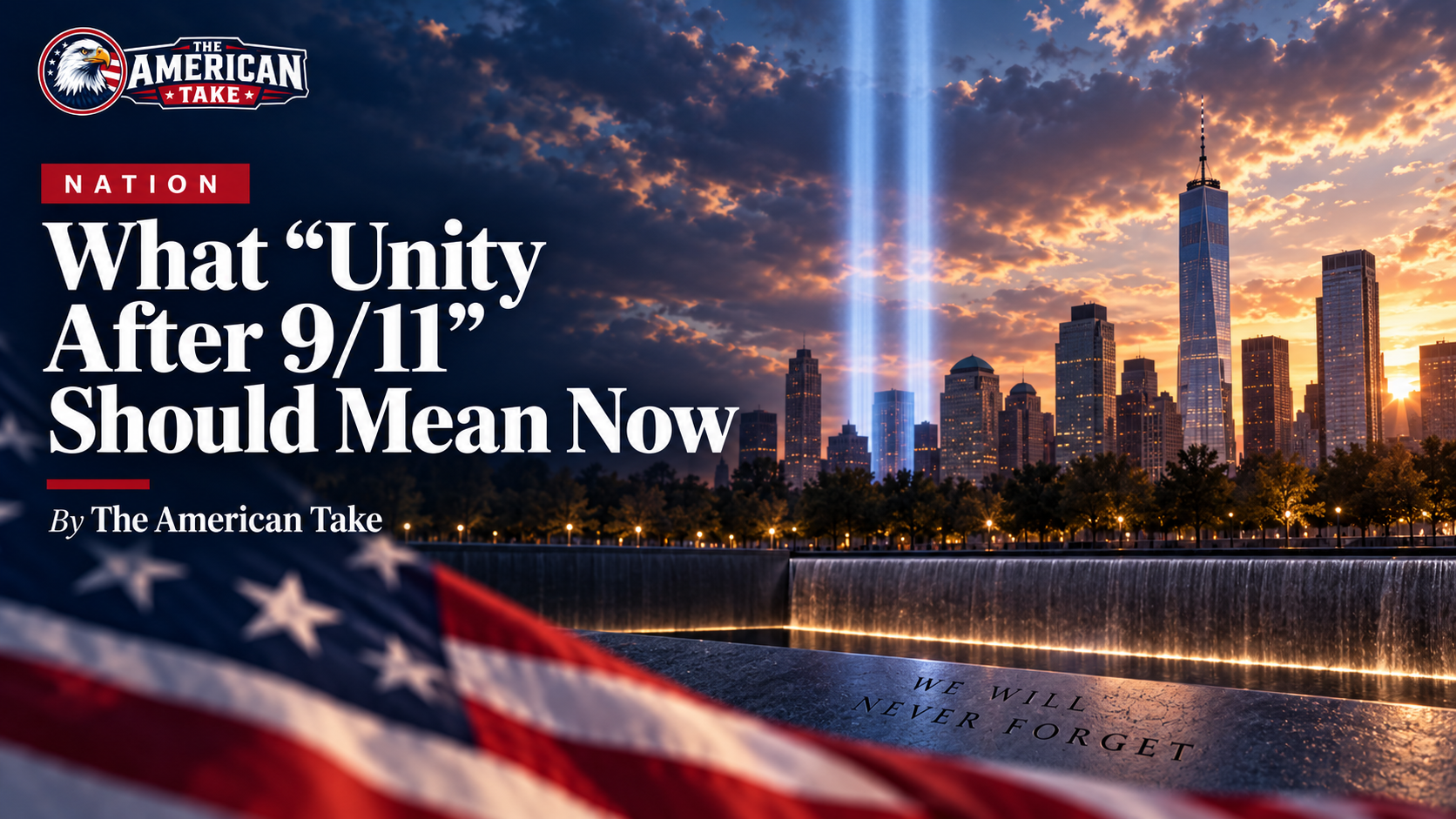
Every September 11 anniversary brings back the same observation: Americans remember the unusual sense of unity that followed the attacks. The memory is powerful because it contrasts so sharply with the country’s current political climate.
It is easy to romanticize that period. Americans still argued. Government made controversial decisions. Fear produced mistakes. Muslim Americans faced suspicion and prejudice. Unity did not mean the country suddenly became wise or unanimous.
What changed was the scale at which people understood the national “we.” Political opponents were still fellow citizens. First responders were honored across party lines. Flags appeared on homes that had very different yard signs. For a time, common citizenship felt larger than faction.
That kind of unity cannot be recreated by demanding that everyone agree. It can only be recreated by restoring a basic distinction: an opponent is not automatically an enemy, and a disagreement over policy is not proof that someone hates the country.
A healthy republic needs intense arguments. It also needs rules for having them. Twenty-five years after 9/11, perhaps the most useful lesson is not that Americans once stopped disagreeing. It is that, for a brief time, many remembered they belonged to something larger than the disagreement.
 A product of The American Take · Essential context. Deeper insight. A clearer view ahead.
DIRECT. SIMPLE. YOUR INBOX.
One email. No middleman.
No algorithm deciding whether you hear from us. No social platform standing between you and The American Take. Just The Personal Daily Brief, sent directly.