
WORLD & ENERGY · The American Take
An American Among 12 Dead at Riyadh's Airport
A missile strike on Riyadh's King Khalid International Airport on Oct. 10 killed 12 people, including a U.S. citizen, and wounded 309, Saudi authorities said. The Iran-backed Houthis claimed responsibility the next day.
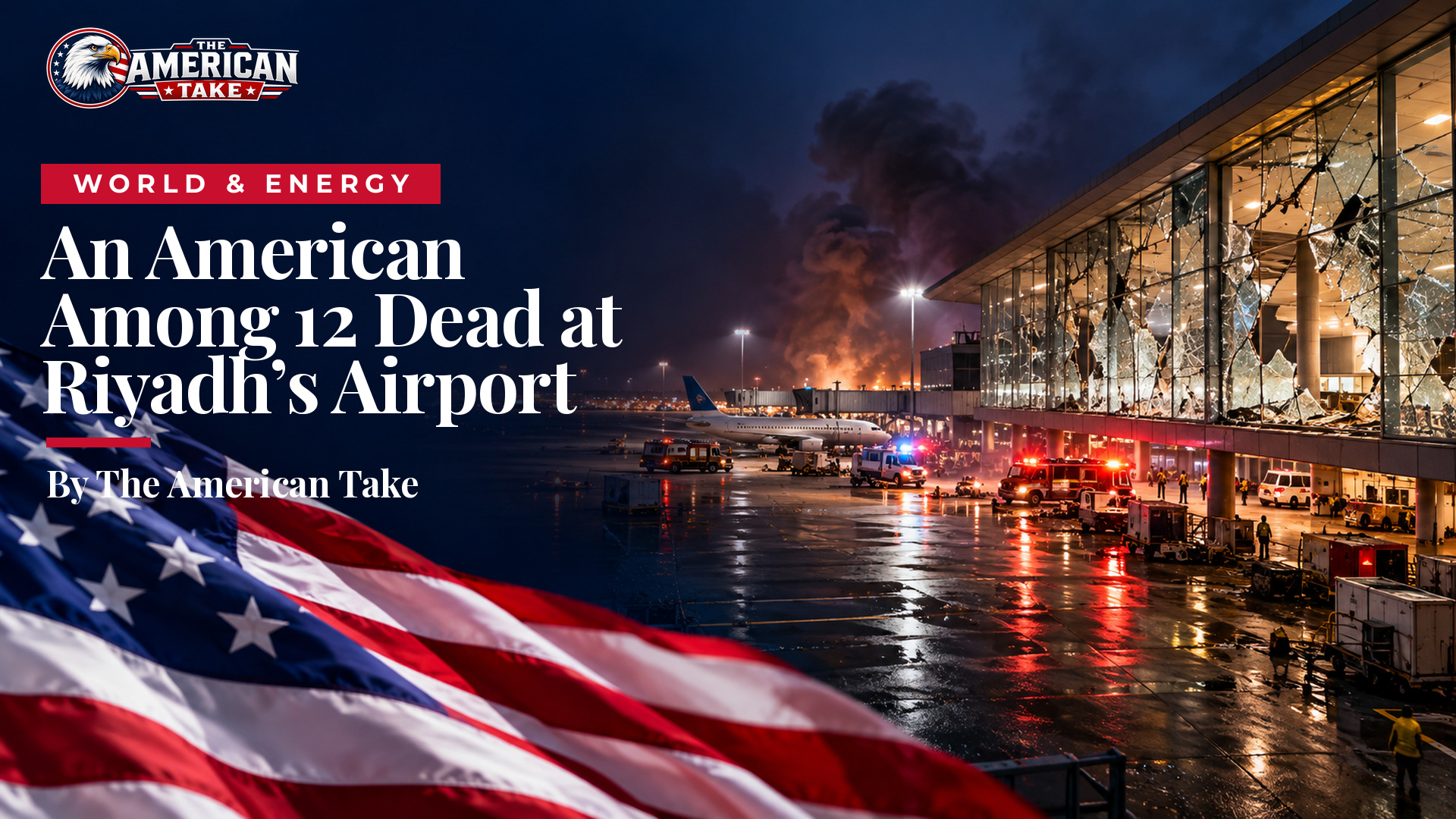
An American citizen is dead after a missile slammed into King Khalid International Airport in Riyadh on Saturday afternoon, Oct. 10. Saudi Arabia's civil aviation authority said the strike killed 12 people and wounded 309, some of them critically. Secretary of State Marco Rubio confirmed that a U.S. citizen was among the dead.
According to the Saudi General Authority of Civil Aviation, the dead were four Saudi citizens, two Bangladeshis, one American, one Egyptian, one Jordanian, one Syrian, one Palestinian and one Sudanese. Some outlets described it as the deadliest strike on Saudi soil in more than a decade. India's embassy said an Indian national died of his injuries and 11 Indians were among the wounded.
Third strike on the same airport in a week
This was not a bolt from the blue. Saudi authorities said on Oct. 7 that an attack on the same airport had killed one person and injured eight, and an Oct. 8 attack killed three Saudi citizens. A Saudi-led coalition blamed the Iran-backed Houthis of Yemen, and the Houthis claimed responsibility for Saturday's strike on Sunday, according to Al Jazeera and Khaleej Times. The precise circumstances of the strike have not been independently established.
Rubio called the attacks "reprehensible" in a post on X and said they showed "a blatant disregard for innocent civilian life." President Trump said "what happened in Saudi Arabia is not acceptable," said he would speak with Crown Prince Mohammed bin Salman, and, asked whether the United States would get involved, answered: "We'll find out."
That answer matters. Axios reported in September that Trump weighed strikes on the Houthis in Yemen after the Saudis asked for U.S. military help, and then held off. He has now kept the option on the table after an American was killed.
The take
When a terrorist militia kills an American in an airport terminal, the question is no longer whether this is someone else's war. It is whether the people who did it pay a price.
The Houthis are not a rogue gang acting alone. They are armed and backed by Iran, and they have spent this month firing on a civilian airport used by travelers from around the world, including Americans. Three strikes in four days on the same airport is not an accident of war. It is a campaign against civilians.
The president is right to refuse to rule anything out. Deterrence depends on the enemy not knowing exactly where the line is, and "we'll find out" is a better answer than a public promise of restraint. Restraint was tried. The attacks kept coming.
But conservatives should also be clear about what we want. Americans who backed this administration were tired of open-ended wars with no defined goal. If there is a response, it should be swift, limited and aimed squarely at the people and launch sites responsible, with a clear message to Tehran that its proxies' actions carry its name. Punish the attackers. Protect Americans. Do not sign up for an occupation of Yemen.
It is also fair to ask what the Saudis are doing for themselves. The kingdom is wealthy, heavily armed and has been fighting the Houthis for years. Washington can share intelligence and help defend airspace without carrying the whole fight.
An American family is grieving tonight because a missile hit an airport. Washington owes them an answer, and the men who launched it should not sleep easy.
 A product of The American Take · Essential context. Deeper insight. A clearer view ahead.
DIRECT. SIMPLE. YOUR INBOX.
One email. No middleman.
No algorithm deciding whether you hear from us. No social platform standing between you and The American Take. Just The Personal Daily Brief, sent directly.