
WORLD & ENERGY · The American Take
Here’s How Many Americans Have Actually Died in Iran War …
How many Americans have died in the Iran war?
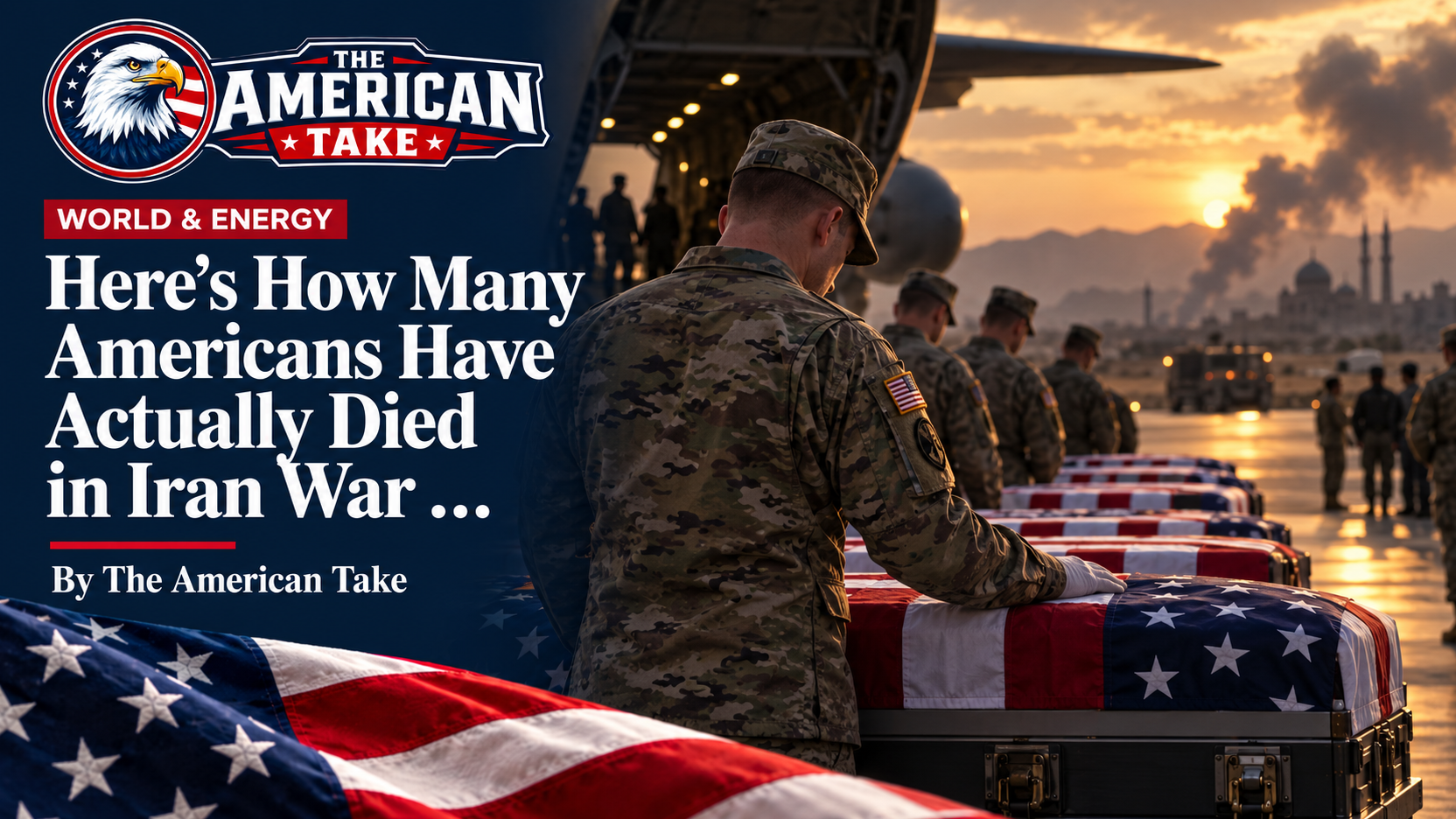
How many Americans have died in the Iran war?
That should be one of the easiest questions for the Pentagon to answer.
Right now, it isn't.
The Defense Department's public casualty accounting lists 19 U.S. service-member deaths connected with operations during the Iran conflict, according to the most recent public reporting. Fourteen are listed under Operation Epic Fury, the Pentagon's formal name for the initial campaign against Iran, while five others appear under a broader “Overseas Operations” category. (washingtonpost.com)
But six U.S. officials familiar with internal Defense Department casualty accounting told *The Washington Post* that the actual number of U.S. military fatalities in the Middle East since the war began is higher.
Five officials put the number at at least 22.
A sixth said 23.
Reuters independently reported the dispute, noting that Defense Secretary Pete Hegseth rejected the reporting and called it false. (washingtonpost.com)
So what is the real number?
The most accurate answer available to the public right now is:
The Pentagon publicly acknowledges 19 deaths associated with operations during the conflict, while officials with access to internal accounting say at least 22—and possibly 23—U.S. military personnel have died in the region since the war began.
Those are not necessarily identical categories.
That distinction matters.
Some of the additional deaths described by officials may not have been caused directly by Iranian fire. They may involve accidents, medical emergencies or other noncombat incidents affecting personnel deployed in the region while the war was underway. Historically, the Defense Casualty Analysis System has included both hostile and non-hostile deaths associated with military operations. (washingtonpost.com)
That is precisely why the discrepancy deserves a clear explanation rather than a shouting match.
The administration's defense is straightforward: officials deny hiding combat deaths, and Hegseth has said the accusation that the Pentagon concealed battlefield fatalities is false. (reuters.com)
The strongest criticism is equally straightforward: if the Pentagon maintains an internal count that is higher than the public database, Americans deserve to know why the categories differ.
This should not be a partisan question.
Whether someone supports Trump's Iran strategy or believes the United States should never have entered the war, the people doing the fighting belong to the country—not to a political party.
Their deaths should not become accounting abstractions.
An America-first foreign policy is supposed to begin with American interests.
That means every military commitment should face a hard test:
What is the objective?
What does victory mean?
What will it cost?
What happens if the conflict expands?
And how many Americans are being asked to risk their lives?
The Iran conflict has now stretched for months. The administration argues that military pressure is necessary to prevent Iran from threatening U.S. interests and obtaining nuclear weapons. Trump has simultaneously continued talking about the possibility of a negotiated settlement. (apnews.com)
Those positions are not inherently contradictory.
A president can use force while pursuing negotiations.
But an anti-war conservative argument—one associated with an older American skepticism of foreign entanglements—is that military force should remain the last instrument, not the default instrument.
The United States is powerful enough to enter wars quickly.
Getting out is usually harder.
That makes casualty transparency even more important.
The Pentagon's own Operation Epic Fury database listed 14 deaths as of September 23. Separate overseas-operation records bring the publicly disclosed conflict-era total cited by *The Washington Post* to 19. (dcas.dmdc.osd.mil)
The higher internal figures reported by officials remain disputed.
So it would be irresponsible to print “23 Americans killed in the Iran war” as though that number were conclusively established.
It would be equally irresponsible to pretend there is no discrepancy.
There is.
The administration can resolve it easily:
Publish the complete accounting.
Explain which deaths are classified under Operation Epic Fury.
Explain which appear under Overseas Operations.
Explain whether additional deaths occurred among service members deployed in connection with the conflict but excluded from those categories.
And explain why.
That is not anti-military.
It is respect for the military.
Americans can debate the wisdom of the war afterward.
First, they deserve to know its human cost.
 A product of The American Take · Essential context. Deeper insight. A clearer view ahead.
DIRECT. SIMPLE. YOUR INBOX.
One email. No middleman.
No algorithm deciding whether you hear from us. No social platform standing between you and The American Take. Just The Personal Daily Brief, sent directly.