
WORLD & ENERGY · The American Take
Iran-Backed Houthis Hit Riyadh's Airport, Killing Three. Airlines Are Pulling Flights
Saudi authorities say three Saudi citizens died in Thursday's attacks on King Khalid International Airport, which the Iran-backed Houthis claimed. Lufthansa and Indian carriers have suspended Riyadh service.
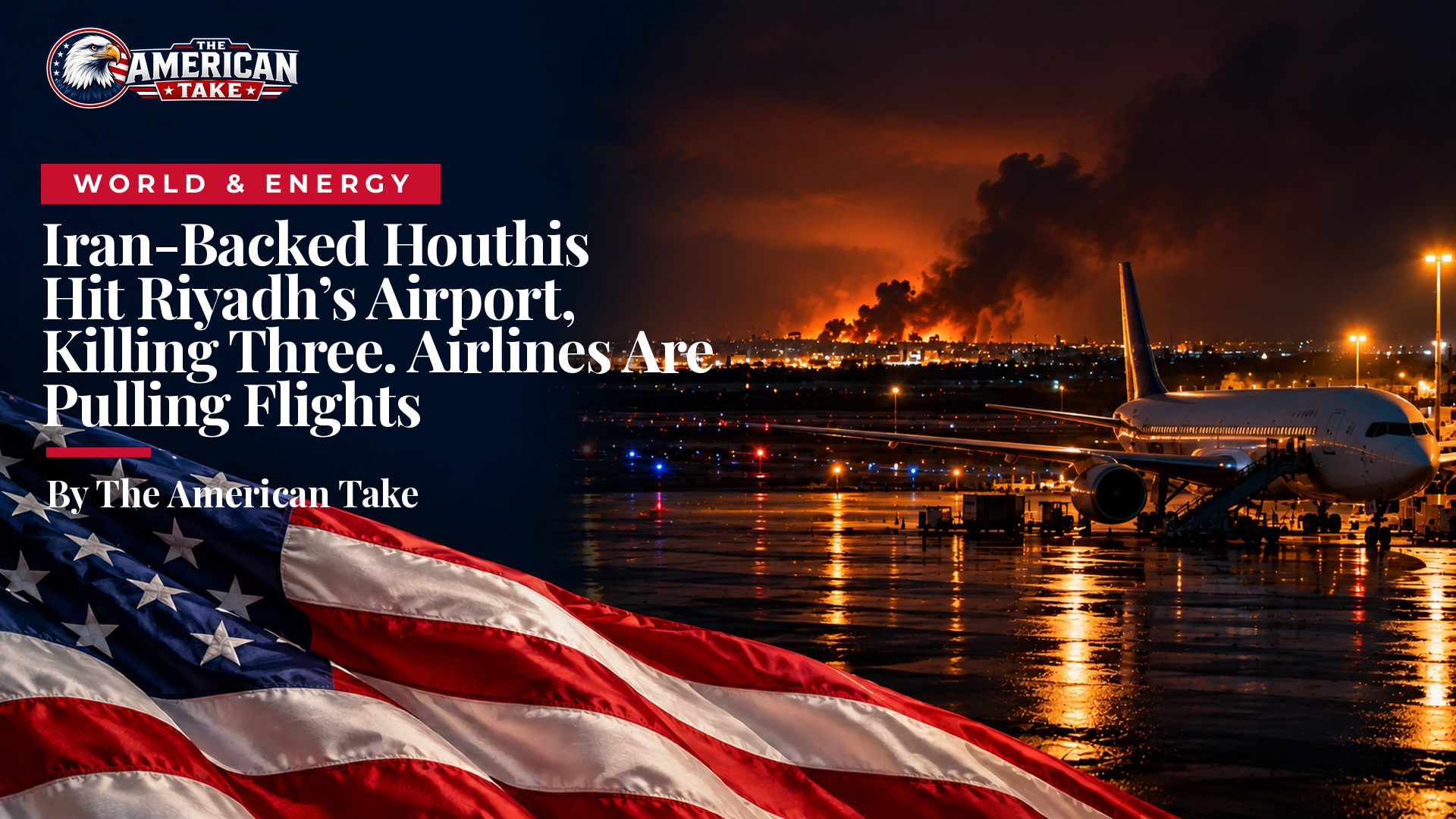
Saudi authorities say three Saudi citizens were killed on Thursday, October 8, in attacks on King Khalid International Airport in Riyadh. One of the dead was a pilot for the national airline, Saudia, identified by the airline as Capt. Hamoud Ali Alkalthami. Several other people "of different nationalities" were wounded, according to the Saudi civil aviation authority. The Houthi rebels of Yemen, who are backed by Iran, claimed the attack.
The Saudi statement said the first strike hit airport facilities and the second hit an aircraft. It did not name who was responsible. The Houthis said they struck the airport with a ballistic missile, according to Reuters, while other outlets reported a claim of two cruise missiles. The reports differ on the weapon, and we will not choose between them.
The fallout for travelers
The airline industry reacted quickly. A Lufthansa spokesperson said the German group's airlines would suspend flights to Riyadh through October 16, citing "current developments in the Middle East." Reuters reported that Indian carriers, including Air India, also suspended service, and ARY News reported that Pakistan cancelled 42 flights. According to FlightAware, hundreds of flights to and from Riyadh were canceled on Thursday. Saudi media reported that the airport reopened and traffic returned to normal, and Saudia Group said operations were back to normal as of 6 p.m. Thursday.
An airport that serves the capital of America's largest Arab partner was hit twice in a day, and then reopened within hours. Both facts matter. The first shows the reach of Iran's proxies. The second shows that Riyadh is determined to carry on.
The context
The attack was the deadliest in Saudi Arabia since the kingdom and allied forces launched a major military offensive against the Houthis in neighboring Yemen last weekend, according to the reporting. Earlier in the week, attacks on Riyadh and Abha airports killed three civilians, according to the same coverage. The reports do not agree on whether those earlier deaths are the same three people counted Thursday, and we are not treating them as separate until the Saudi government says so.
A coalition spokesman said forces had destroyed dozens of Houthi military targets across Yemen. Saudi Arabia said it would "punish" the Houthis. Those are statements of intent, and independent confirmation of the damage was not available in the reports we reviewed.
What this means for Americans
There are three points worth stating plainly.
First, civilian aviation is not a legitimate target. A missile fired at an airport and an airliner is aimed at ordinary people: pilots, passengers and ground crews. Iran, which backs the Houthis according to the reporting, bears responsibility for the consequences. Washington should say so without hedging.
Second, the Houthis now threaten air travel in a region where many Americans work, including in the energy and defense sectors. American businesses and travelers should follow State Department guidance, and the administration should be ready to help citizens who need to leave. We did not find any report of American casualties in this attack.
Third, deterrence has to be real. For years the U.S. and its partners have argued about how to respond to Iranian-backed attacks, with half-measures that satisfied no one. Saudi Arabia and its allies are now answering with force. The right American posture is to support allies who defend themselves, press for the Houthis' sponsors to pay a price, and keep Congress involved in any decision that commits U.S. forces. The Constitution gives that war power to the legislature, and a serious foreign policy respects it.
What we do not yet know
We do not know whether the Houthis will strike again, how long Lufthansa and the Indian carriers will stay away after October 16, or how this plays into oil prices. We also have no independent confirmation of the coalition's claims about Houthi losses.
What we do know is simple. Three Saudis are dead, an airport in a major capital was attacked, and the group that claimed it is armed and supported by Iran. That is a fact pattern American readers should keep in mind the next time someone insists Tehran's proxy network is a distant problem.
 A product of The American Take · Essential context. Deeper insight. A clearer view ahead.
DIRECT. SIMPLE. YOUR INBOX.
One email. No middleman.
No algorithm deciding whether you hear from us. No social platform standing between you and The American Take. Just The Personal Daily Brief, sent directly.