
WORLD & ENERGY · The American Take
Houthis Threaten U.S. If It Joins Saudi Strikes
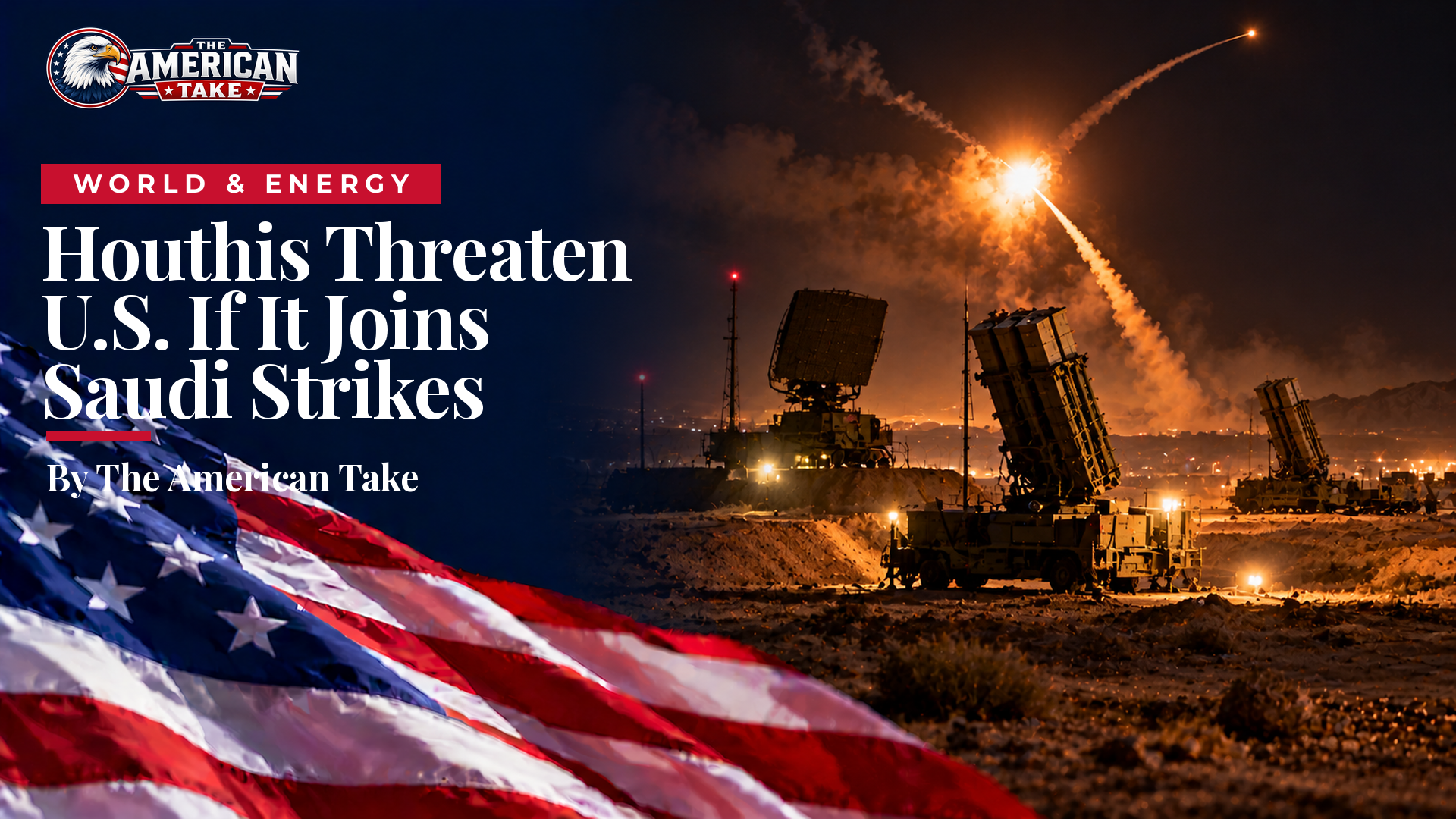
Saudi Arabia is investigating how Houthi missiles and drones got through to Riyadh's King Khalid International Airport, as the Iran-backed group fired more missiles and warned the United States against joining Saudi strikes.
Update: This story follows our earlier coverage of the deadly Houthi attack on Riyadh's airport.
The Houthis are not done, and now they are talking to Washington directly. The Iran-backed militia that hit Saudi Arabia's busiest airport has warned the United States of a painful response if America joins Saudi strikes against it.
Where things stand
Saudi Arabia has opened an investigation into how its air defenses failed to stop a barrage of missiles and drones fired at King Khalid International Airport in Riyadh. One report, citing officials, said the Houthis first sent drones to overwhelm the system and then fired a mix of cruise and ballistic missiles, which traveled more than 620 miles without early warning. Saturday's attack is reported to have killed 13 people and wounded hundreds. Other reports put the toll higher, including at least 20 dead, among them an American, across a week of attacks, so the final count is not settled. Saudi aviation authorities have extended the airport's closure through Oct. 17, affecting nearly 700 flights a day, according to Flightradar24.
The attacks have continued. The Saudi-led coalition said it intercepted and destroyed a Houthi ballistic missile launched at Riyadh on Monday night, and said it also intercepted two ballistic missiles aimed at Khamis Mushait in the kingdom's south.
The Houthis, for their part, said Saudi Arabia carried out more airstrikes on Monday night on areas the group holds along Yemen's northern border and its Red Sea coast. Those strikes had not been independently confirmed in the reporting we reviewed.
The Houthis have now warned Washington directly. Mohammed Al Bukhaiti, a member of the group's political bureau, told AFP that if the United States joins what he called the aggression against Yemen, the response will be aimed at the U.S. and its interests in the region. CBS News described the threat as a "swift and painful" response. The warning came after reports that President Trump was considering joining the offensive, and after Trump denounced the Houthi attacks following a call with Saudi Crown Prince Mohammed bin Salman, according to Fox News. Australia's ABC described the fighting as a rapidly escalating conflict that has spilled over from the war between the United States and Iran.
The take
The Houthis have spent years firing at ships, at Israel and at Saudi cities. They did not build that arsenal alone. They are Iran's proxy, armed and backed by Tehran, and their campaign against Saudi airports is part of Iran's wider war. Treating them as a local Yemeni problem misses the point.
Their threat against the United States deserves to be taken seriously, but not as a reason to flinch. Threats are how proxies try to keep America on the sidelines while they hit our partners. If Washington lets a militia set the terms of its foreign policy, every other Iranian proxy will notice.
That does not mean America should rush into a new ground war in Yemen. It means the United States should do what strong powers do for their partners: help Saudi Arabia close the gaps in its air defenses, keep intelligence flowing, protect American citizens and shipping in the region, and make clear that attacks on Americans will be answered. Any wider military commitment should come with a clear goal and the support of Congress.
The Saudi investigation matters too. A barrage that gets through to a major international airport is a warning for every country that relies on missile defense, including ours. The lesson of this war, from English air bases to Gulf airports, is that cheap drones and missiles fired in large numbers can overwhelm expensive defenses. The answer is better defenses, more of them, and making the people who launch these attacks pay a price they cannot afford.
Peace in the Gulf will not come from hoping the Houthis lose interest. It will come when Tehran and its proxies decide the cost is too high.
 A product of The American Take · Essential context. Deeper insight. A clearer view ahead.
DIRECT. SIMPLE. YOUR INBOX.
One email. No middleman.
No algorithm deciding whether you hear from us. No social platform standing between you and The American Take. Just The Personal Daily Brief, sent directly.