
POLITICS · The American Take
Trump: These Fake News Outlets Are BANNED from the White House
President Donald Trump said Friday that CNN, MS NOW and Politico would be barred from the White House, escalating a long-running fight between his administration and major national news organizations.
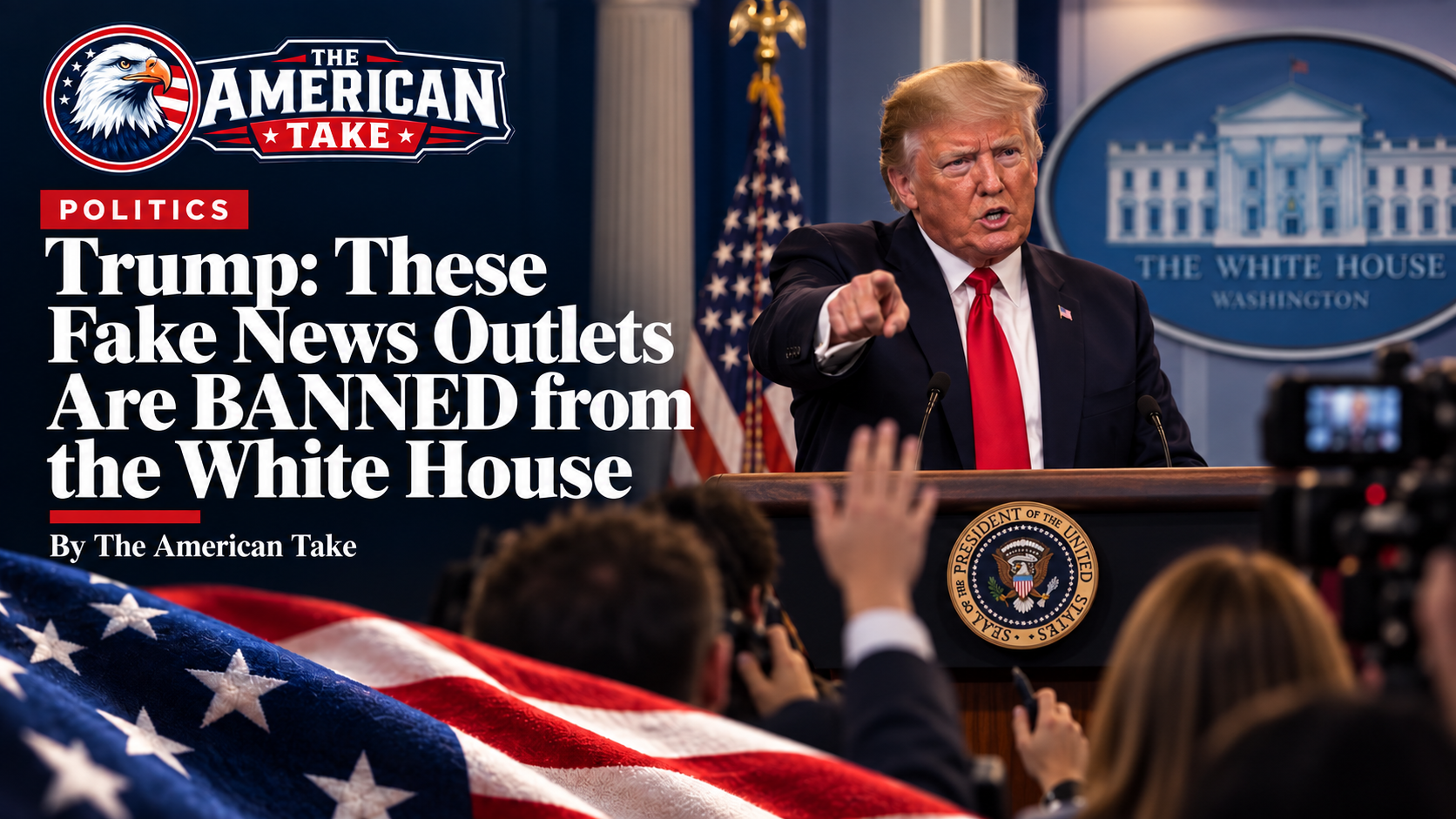
President Donald Trump said Friday that CNN, MS NOW and Politico would be barred from the White House, escalating a long-running fight between his administration and major national news organizations.
Trump announced the move on Sept. 18 and accused the three outlets of publishing what he called “fake news.” He also suggested other organizations could face similar treatment. The announcement immediately raised questions about what the ban would cover in practice, because reporters for at least some of the named outlets were still present at the White House after Trump’s statement.
That distinction matters. Trump clearly announced his intention to bar the organizations, but the precise scope of the restriction — whether it applies to daily press credentials, access to specific events, access to the broader White House complex, or some combination — was not immediately clear in initial reporting.
Reuters reported that the move was expected to face legal challenges. CNN called the action unconstitutional, while the White House Correspondents’ Association criticized restrictions based on a news outlet’s coverage. The dispute is likely to revive arguments over how much discretion a president has to control press access to White House events and facilities.
The legal question may turn on what the White House actually does next. Courts have generally recognized greater presidential discretion over invitations to limited-access events, such as small Oval Office gatherings or tightly constrained press pools. A broader exclusion from generally available press facilities or the withdrawal of standing credentials raises different First Amendment and due-process questions. That is why the distinction between Trump’s announcement and its eventual implementation is not merely semantic.
There was also an immediate gap between the statement and conditions on the ground. Reuters reported that representatives of all three organizations could still be seen working at the White House Friday afternoon. A separate report cited by Reuters said the organizations were being informed that access to the grounds would end Saturday, but the administration had not publicly supplied detailed written rules defining the restriction when the announcement was made.
The administration and the press have fought similar battles before. During Trump’s first term, the White House attempted to revoke CNN correspondent Jim Acosta’s credential before a federal judge ordered it restored on due-process grounds. More recently, the Associated Press fought restrictions imposed after a dispute over terminology used for the Gulf of Mexico.
Trump’s first administration also faced a successful court challenge after suspending the press pass of Playboy correspondent Brian Karem. Those earlier disputes do not automatically decide the legality of the new announcement, because the scope and procedures may differ. They do show, however, that White House access decisions can be reviewed by courts when an established credential or generally available access is restricted.
The administration’s position is that the president should not be required to provide access to organizations he believes have repeatedly reported inaccurately or unfairly. Press organizations and civil-liberties advocates argue that government officials cannot punish journalists simply because they dislike the viewpoint or tone of their reporting.
For now, the most important fact is the narrow one: Trump publicly announced that CNN, MS NOW and Politico are banned from the White House. What remains unresolved is exactly how the White House will implement that order and how quickly the courts may become involved.
Trump also warned that other major outlets could face similar restrictions in the future. That makes Friday’s announcement potentially broader than a one-day dispute with three news organizations. If the White House begins enforcing the ban across credentials, briefings and events, it could become a significant test of the administration’s power over press access.
The story is still developing, and the legal and operational details will determine how consequential the announcement ultimately becomes. What is clear is that Trump has turned his long-running criticism of major media organizations into a direct access fight inside the White House itself.
 A product of The American Take · Essential context. Deeper insight. A clearer view ahead.
DIRECT. SIMPLE. YOUR INBOX.
One email. No middleman.
No algorithm deciding whether you hear from us. No social platform standing between you and The American Take. Just The Personal Daily Brief, sent directly.