
ECONOMY · The American Take
Trump’s Drug Plan To Save Tens of Billions — Here’s How Seniors Win
The GENEROUS model ties selected Medicaid drug prices to prices in peer countries. Government savings are projected, not guaranteed, and seniors generally benefit through separate Medicare and direct-purchase channels.
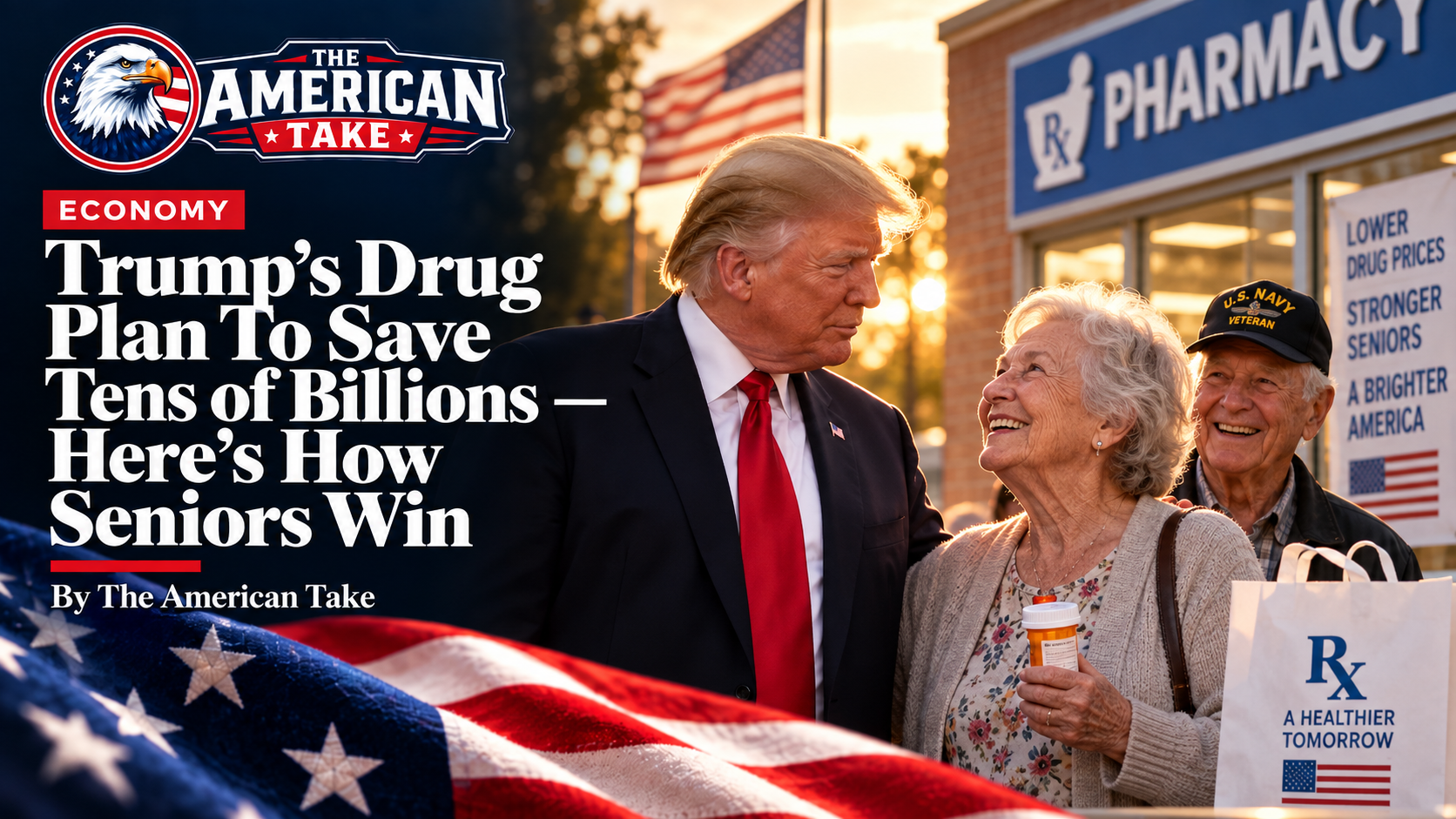
Every state, the District of Columbia and Puerto Rico has applied to the Trump administration’s GENEROUS Medicaid drug-pricing model, giving the initiative potential national reach and prompting projections of tens of billions of dollars in federal and state savings over the next decade.
Application is not the same as a completed participation agreement. CMS said on September 18 that 40 states and Puerto Rico had already signed agreements. The remaining applicants had until September 30 to sign, according to the agency. That distinction matters when describing what was operational rather than merely expected.
That number needs an important qualification: those projected savings belong to government Medicaid programs. They are not checks being mailed to seniors, and they should not be described as direct out-of-pocket savings for every older American.
Seniors may still benefit from the administration’s broader drug-pricing strategy, but generally through different channels—Medicare coverage and negotiated terms, lower prices for certain covered medicines, or cash-price purchasing programs such as TrumpRx. Medicaid and Medicare are different programs with different populations, financing and pharmacy-benefit rules.
What the GENEROUS model does
GENEROUS stands for GENErating cost Reductions fOr U.S. Medicaid. It is a CMS Innovation Center model designed to reduce what Medicaid pays for selected prescription drugs by linking net prices to lower prices available in a group of other developed countries.
The mechanism relies on supplemental manufacturer rebates. Participating drugmakers agree to provide pricing intended to bring Medicaid’s net cost for covered products closer to the model’s international reference price. Participating states accept standardized coverage terms for those drugs rather than negotiating separate supplemental discounts on the same products.
Participation is voluntary for manufacturers, and the model does not automatically apply the reference price to every drug made by every company. CMS identifies participating manufacturers and covered products under the model’s agreements. That makes the size of the participating drug list, utilization and actual rebate performance crucial to the final savings.
The White House Council of Economic Advisers projected that the broader pricing push could save state governments $27.6 billion and the federal government $36.6 billion over ten years. Together, those figures produce the “tens of billions” claim. They remain estimates rather than booked savings.
Where seniors may see a benefit
Medicaid primarily serves eligible low-income Americans, including children, pregnant people, people with disabilities and some low-income seniors. Older adults who qualify for both Medicare and Medicaid could benefit if lower Medicaid costs help preserve services or if a covered drug’s access terms improve. But most seniors receive their primary health coverage through Medicare, not Medicaid.
The Trump administration has separately reached drug-pricing agreements affecting Medicare access and prices for some medicines, including certain weight-loss drugs, and has promoted TrumpRx as a way for some consumers to obtain negotiated cash prices. Those programs must be evaluated on their own terms. A senior’s actual savings depend on the specific drug, insurance status, plan design, eligibility and whether the negotiated price beats existing coverage or pharmacy alternatives.
Medicaid savings can also matter indirectly. Because Medicaid is jointly financed by states and the federal government, lower net drug spending can reduce pressure on public budgets. States could use fiscal room for health services, but the model does not mechanically require every saved dollar to become a new benefit for seniors.
The promise and the uncertainty
Supporters argue that U.S. public programs should not pay materially more than peer countries for the same medicine. They see international reference pricing as leverage against a market in which American purchasers have often paid higher prices.
The pharmaceutical industry argues that importing foreign pricing policies can reduce revenue available for research and may limit access to new treatments. PhRMA has also criticized the model’s reference-pricing approach. Those claims will be tested against the actual participation terms, product access and investment behavior.
Independent analysts have cautioned that some deal terms are not public, making it difficult to reproduce the administration’s long-range projections. Medicaid already receives substantial statutory rebates, so the relevant measure is the additional net savings after existing discounts—not the difference between a list price and a foreign price.
The available evidence supports a conditional conclusion. Nationwide applications give GENEROUS a potentially broad platform, and the government projects substantial savings. The model’s reach depends on applicants completing participation agreements. Seniors may benefit where separate Medicare, dual-eligibility or direct-purchase arrangements lower their real costs. Those distinct mechanisms do not support a promise that every senior will receive a share of the Medicaid savings.
 A product of The American Take · Essential context. Deeper insight. A clearer view ahead.
DIRECT. SIMPLE. YOUR INBOX.
One email. No middleman.
No algorithm deciding whether you hear from us. No social platform standing between you and The American Take. Just The Personal Daily Brief, sent directly.