
WORLD & ENERGY · The American Take
CHAOS: France Rounds Up 6,100, Shuts Down 500 High Schools. Over 700 Cops Hurt.
Six thousand arrests, hundreds of schools shut and more than 700 police hurt. The grievances were real. The violence is the story.
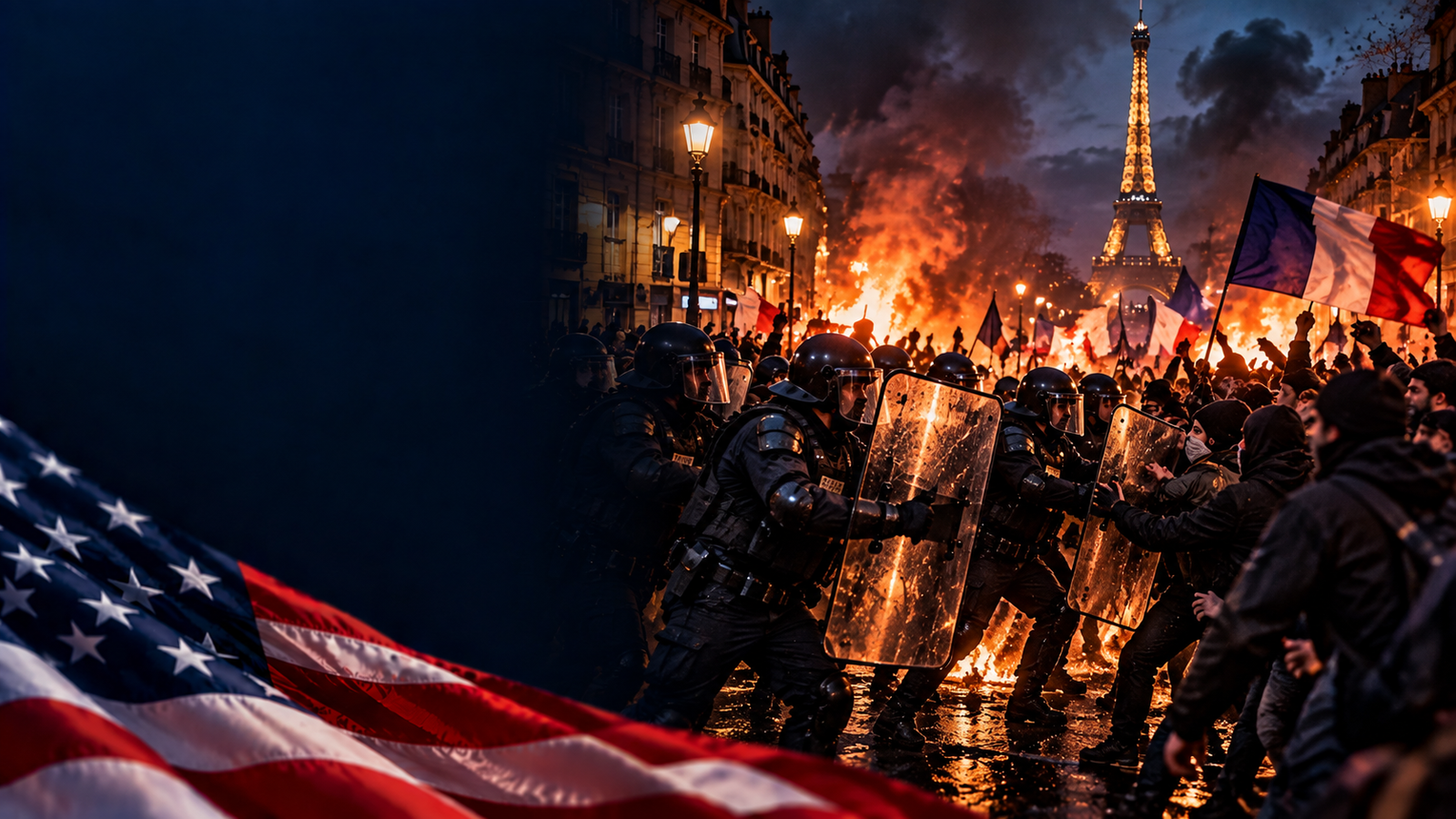
A country is losing control of its own classrooms. According to an October 7 report, more than 6,100 people have been arrested since the protests began, 715 police officers have been injured, and 500 high schools were closed as of Wednesday, down from 891 on Tuesday.
That is not a protest. That is a national emergency in a G7 country.
How It Started
The unrest began with students angry about school conditions. The Nightly reported on October 1 that the protests started the previous Friday at secondary schools in the greater Paris area, and that students cited a lack of resources, a shortage of teachers and dilapidated school buildings. Others reported hot classrooms and missing teachers. Those are real complaints.
By September 30, Interior Minister Laurent Nunez reported that 356 schools had been affected, 625 people had been arrested that day, 83 police officers had been injured and 32 teachers and pupils had been hurt. The violence included destruction inside schools, arson attacks, and cars belonging to teachers set on fire.
How It Spread
By October 2, eNCA reported that roughly 400 of France's 3,700 high schools were expected to close, that about 2,000 people had been taken into custody and that 90 percent of them were minors. At least 65 school staff members had been injured, including 40 principals, along with some 170 students, and more than 100 schools had suffered severe damage.
The disorder was not confined to one city. Reports named Paris, Rennes, Brest and Marseille, and The Daily Wire added Nantes, Lyon and Lille. The Independent, as relayed by UNN, reported dozens of teachers attacked, and that in Marseille young people forced firefighters to abandon their vehicle and then set it on fire near a lycee, and an educator was struck on the head with an iron bar by non-students.
What Officials Say
President Emmanuel Macron said young people's concerns were "legitimate but could in no way justify violence." On that, at least, he is right. Education Minister Edouard Geffray said the student movement was being "held hostage." Justice Minister Gerald Darmanin asked prosecutors to hold parents financially liable for the damage, and Prime Minister Sebastien Lecornu convened an emergency meeting.
The Politics
The politics are already ugly. The French government accuses the hard-left France Unbowed party of fueling the movement. The party denies it. Commentators in some coverage go further and point to a far-left alliance. Treat that as the government's allegation and outside opinion, not proven fact. Figures also come from different outlets and different dates, which is why they differ.
Our Take
The left will say these are teenagers with real grievances about heat and teacher shortages. They are right that the grievances are real. But grievances do not burn teachers' cars, put principals in the hospital or send thousands of people through police custody. What is not in dispute is the scale, and what it says about leaders who excuse disorder until it reaches their own school gates. Americans should note how fast a complaint becomes a riot when officials hesitate to call it one.
 A product of The American Take · Essential context. Deeper insight. A clearer view ahead.
DIRECT. SIMPLE. YOUR INBOX.
One email. No middleman.
No algorithm deciding whether you hear from us. No social platform standing between you and The American Take. Just The Personal Daily Brief, sent directly.