
WORLD & ENERGY · The American Take
Dept. of War Accused of Hiding True Number of U.S. Troops Killed in Iran War
A four-death discrepancy has triggered accusations about Pentagon transparency. The higher count comes from unidentified officials cited by The Washington Post; the public database lists 18, and Defense Secretary Pete Hegseth denies the report.
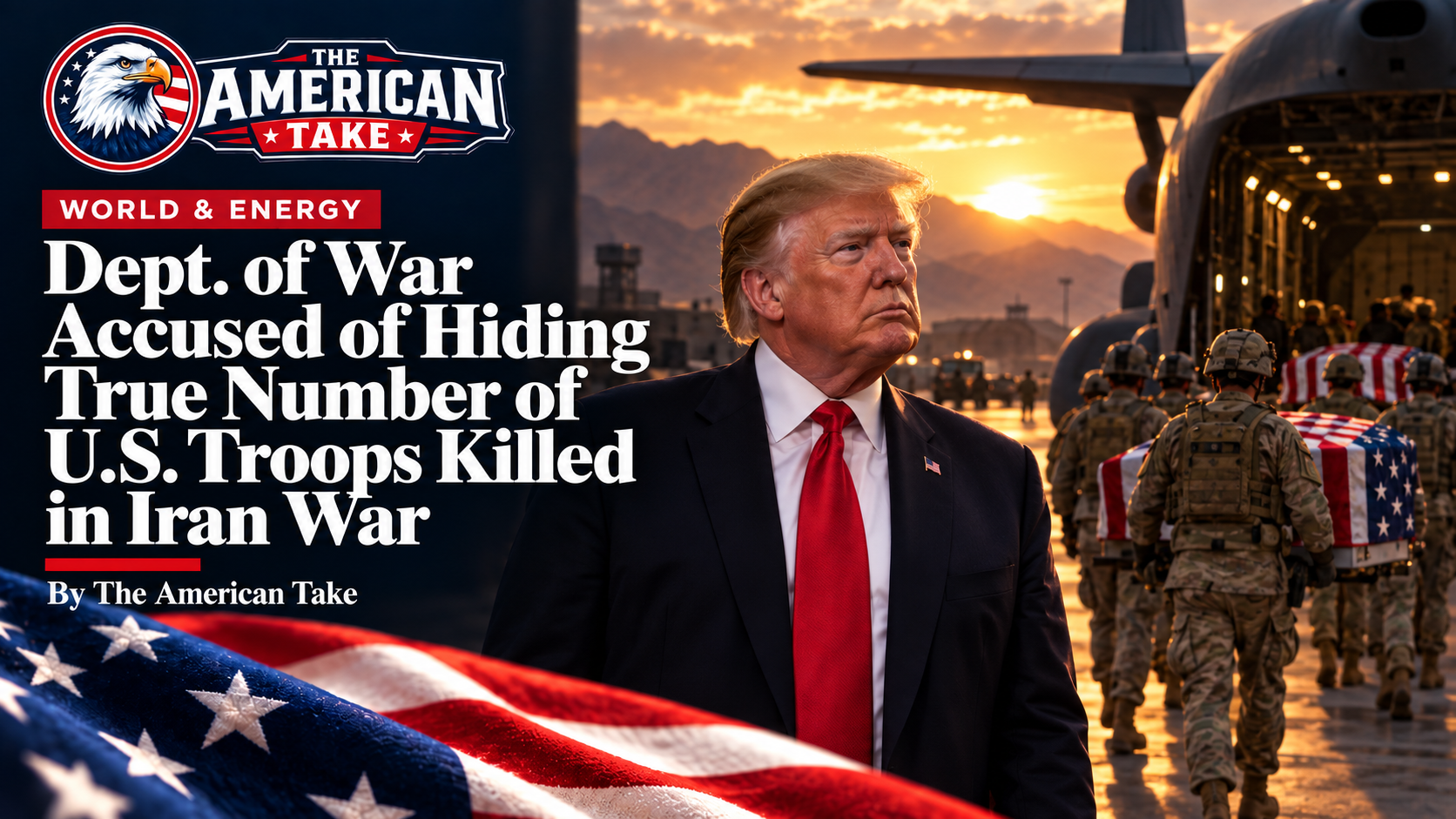
The Pentagon is facing a serious accusation over the human cost of the Iran war after The Washington Post reported that at least 22 U.S. service members have died, four more than the 18 fatalities listed in the Defense Department’s public casualty database.
The discrepancy is real in the published records. The accusation that officials are deliberately “hiding” deaths is not established fact.
The Post based its higher count on unidentified U.S. officials familiar with internal Defense Department casualty accounting. Five officials told the newspaper there had been at least 22 military fatalities. A sixth put the figure at 23. The Post reported that not every additional death was necessarily caused directly by combat, but that the personnel were in the Middle East amid the ongoing hostilities.
Defense Secretary Pete Hegseth flatly denied the story in a social-media post, calling it false. Reuters independently reported the existence of the dispute, the 22-versus-18 figures, the Post’s anonymous sourcing and Hegseth’s denial. Reuters did not independently establish the higher death toll.
What the public record shows
The Pentagon’s Defense Casualty Analysis System listed 18 U.S. military fatalities connected to the period of the Iran conflict as of the report. That database included deaths from hostile and non-hostile causes, according to the Post.
The newspaper said the identities, dates, locations and causes surrounding the additional cases were unclear. It also reported that three U.S. contractors in the region had died, but contractor deaths are separate from the military-fatality count and should not be added to it as though they were service members.
The Pentagon declined to answer the Post’s detailed questions about the accounting gap, the newspaper reported. A refusal or delay in answering does not itself prove intentional concealment. It does leave the public without a reconciled list explaining why officials cited by the Post describe a higher figure than the department’s public database.
Why counts can diverge
Military casualty reporting can involve different definitions and timelines. A death may be under investigation before officials determine whether it was hostile, non-hostile, in the line of duty or connected to a named operation. Notification of relatives can delay public identification. A database may also lag an internal report.
Those are possible categories of explanation, not verified explanations for these four cases. The Defense Department has not publicly provided a case-by-case reconciliation. It would be premature to describe the gap as a clerical delay, just as it would be premature to declare it a deliberate cover-up.
The distinction matters. An undercount is a numerical problem. Delayed reporting is a timing problem. Classification disputes concern which deaths belong in which category. Intentional concealment would require evidence that officials knowingly withheld qualifying deaths to mislead the public.
The accountability question
Accurate accounting of Americans who die while deployed during hostilities is material to families, service members and the public. Casualty figures shape congressional oversight, public understanding of the war and the historical record. Errors or unexplained gaps can undermine confidence even when they do not result from deliberate misconduct.
The Post’s reliance on unidentified officials deserves the same precision. Anonymous sourcing can be necessary when officials face retaliation or are not authorized to speak, but readers cannot independently assess those sources. The report gains weight from multiple officials describing internal data; it still remains a reported account disputed by the defense secretary.
The next responsible step is documentary, not rhetorical. The Pentagon can publish an updated list, explain its inclusion rules and address each disputed case without compromising legitimate privacy interests. Congress can seek the same reconciliation through oversight.
Until that happens, two statements can be made confidently: the Pentagon’s public number was 18, and The Washington Post reported at least 22 based on unidentified officials. Whether the difference reflects delay, classification, error or intentional concealment remains unresolved.
 A product of The American Take · Essential context. Deeper insight. A clearer view ahead.
DIRECT. SIMPLE. YOUR INBOX.
One email. No middleman.
No algorithm deciding whether you hear from us. No social platform standing between you and The American Take. Just The Personal Daily Brief, sent directly.