
WORLD & ENERGY · The American Take
Team Iran Rocks World's Largest Oil Company
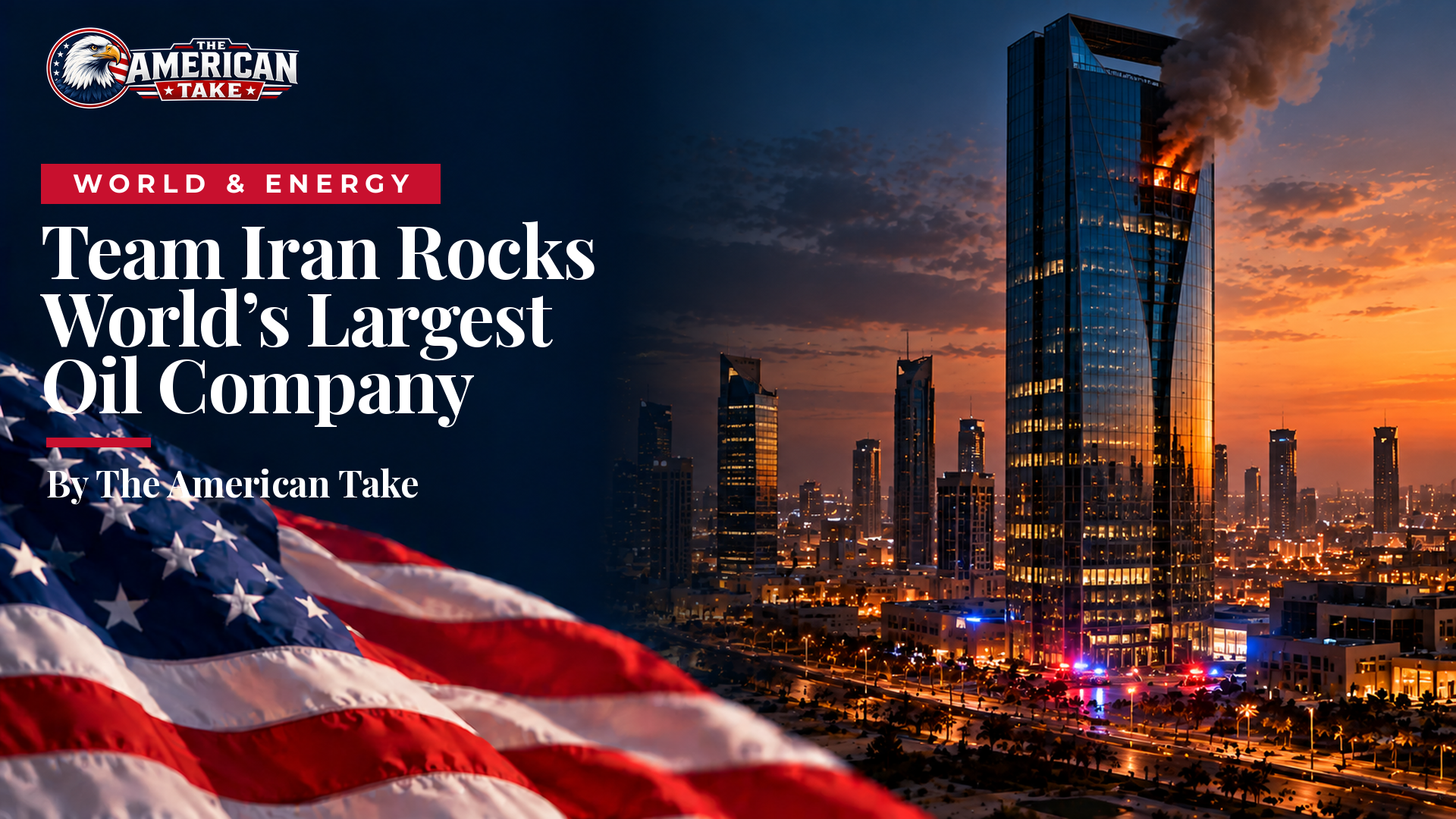
Saudi Arabia's energy ministry said Saudi Aramco's headquarters complex in Dhahran was hit during a Houthi missile attack on Tuesday, causing a limited fire and no injuries.
Iran's proxies are no longer just hitting airports. On Tuesday they reached the front door of the world's most important oil company.
Saudi Arabia's energy ministry said the headquarters complex of Saudi Aramco in Dhahran, in the kingdom's east, was hit during a Houthi missile attack, causing what it called a limited fire with no injuries. The Saudi-led coalition said Houthi missiles targeted several Saudi cities on Tuesday, including Riyadh and Dhahran, and that it shot down a ballistic missile aimed at the capital.
What is known and what is not
The extent of the damage is not clear. Bloomberg reported that it could not immediately establish what caused the fire, or whether the building was struck directly or by debris from an intercepted missile. GV Wire, citing a source, reported damage to the top three floors. The Saudi ministry's account describes a limited fire.
This is not the first Houthi claim against Aramco this month. On October 3, the Houthis claimed a missile and drone attack on an Aramco site in Riyadh. The coalition called those claims misleading. Al Jazeera reports the Houthis are threatening to keep targeting Saudi airports and oil sites.
The strike comes as Saudi Arabia escalates its own campaign against the Houthis, and as the Iran-backed group threatens the United States if it joins in.
The other side
Some analysts caution against overreacting. Saudi Arabia has absorbed Houthi attacks on its energy sector before, including the 2019 strikes on Abqaiq (claimed by the Houthis, though the U.S. blamed Iran) that briefly knocked out about half of its oil output, and global markets recovered. A fire at an office complex is not the same as a hit on processing plants or export terminals. Others argue that American involvement would widen a war that is, for now, mostly Saudi Arabia's to fight.
The take
Here is why an American family should care about a fire in Dhahran.
Gas already costs far more than it did in February. The national average was $4.37 a gallon on October 9, according to CBS News, up from $2.98 on February 27. Diesel has hit record highs. Every missile that flies at Saudi oil infrastructure adds risk to a market that is already stretched, and that risk shows up at the pump.
The Houthis are not freelancers. They are armed, trained and supplied by Tehran, and their campaign against Saudi airports and oil sites is part of Iran's war, fought by proxy so Iran can deny responsibility. Treating each strike as a local Yemeni matter is exactly the mistake Iran wants Washington to make.
That does not mean American troops belong in Yemen. It means the United States should do what it does best: protect shipping lanes, help allies shoot missiles down, choke off the weapons pipeline from Iran, and make clear to Tehran that the cost of its proxies' attacks will be paid in Tehran.
Energy security is national security. The best long-term answer to Houthi missiles is American production: more drilling, more pipelines and more refining at home, so that a fire in Dhahran is a headline and not a hit to every family budget. The administration's energy agenda points that direction. Events this week show why it cannot move fast enough.
 A product of The American Take · Essential context. Deeper insight. A clearer view ahead.
DIRECT. SIMPLE. YOUR INBOX.
One email. No middleman.
No algorithm deciding whether you hear from us. No social platform standing between you and The American Take. Just The Personal Daily Brief, sent directly.