
WORLD & ENERGY · The American Take
Iran's Proxies Are Now Hitting Airports, Grounding Hundreds of Flights
Iran-backed Houthi strikes on Saudi airports, including two attacks on Riyadh's main airport on Oct. 8, killed three Saudi citizens, and flight-tracking data shows hundreds of flights cancelled.
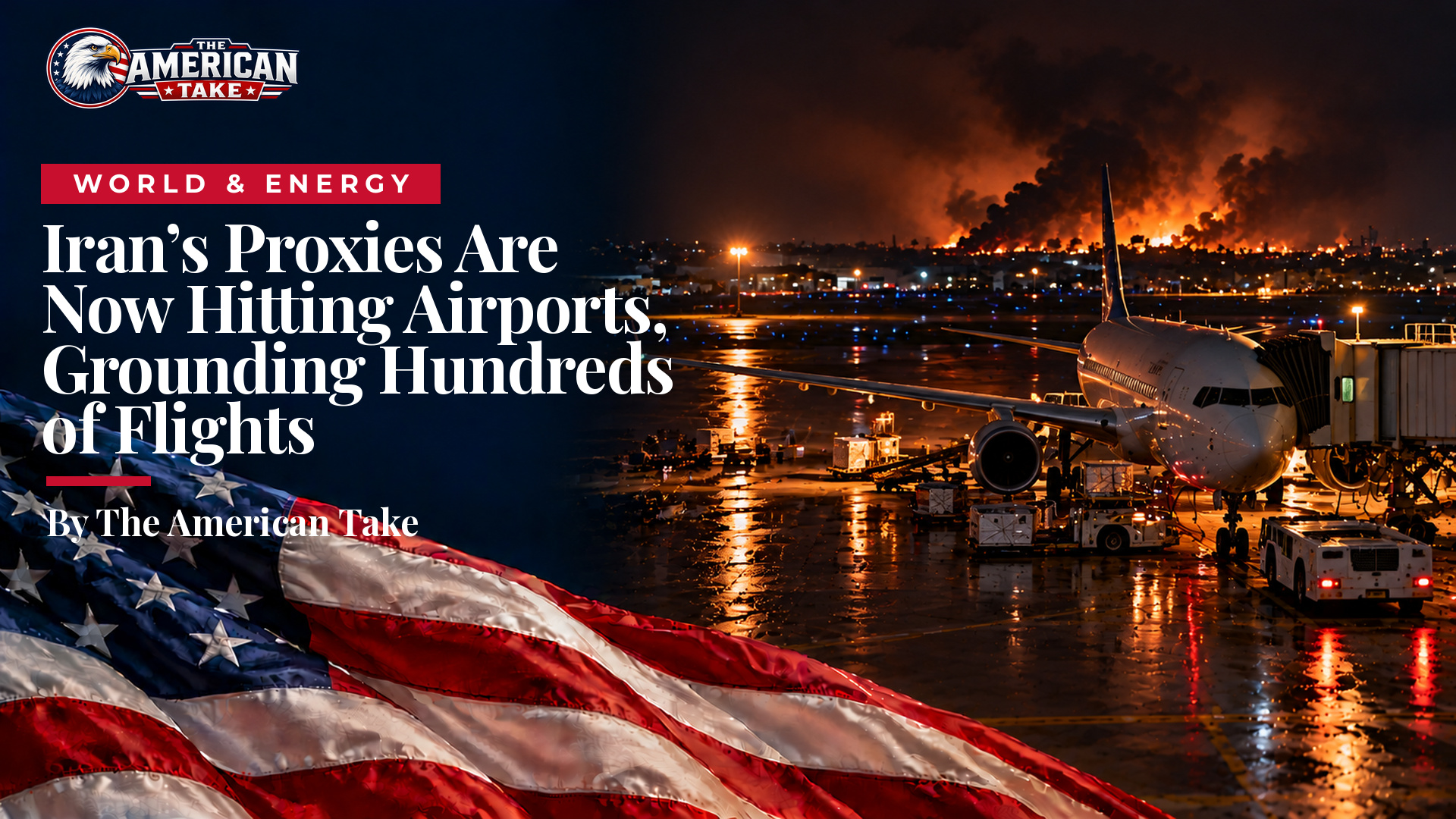
The Houthis, the Iran-backed movement that controls much of Yemen, have taken their war to civilian airports. In the past week, strikes the group claimed hit airports in Saudi Arabia, including the main international airport in Riyadh, and the consequences have reached passengers, airlines and air crews far from the front line.
The headline needs a precise reading. The strikes were carried out by the Houthis, who are backed by Iran. Reports we reviewed do not establish that Tehran directed these particular attacks, and we are not claiming it did. The phrase "Iran's proxies" describes the group's alliance, not a proven chain of command for this operation.
What is confirmed
On Thursday, Oct. 8, two attacks hit King Khalid International Airport in Riyadh. Saudi authorities said three Saudi citizens were killed. Saudia Group named one of the dead as Capt. Hamoud Ali Al-Khaltami (spelled "Alkalthami" in some reports), an airline pilot. Reports said a Saudia aircraft was damaged on the ground with no passengers aboard and that smoke billowed over the airport. Authorities have not clarified whether the aircraft was hit directly or struck by debris from an interception, according to the coverage. The Houthis claimed missile attacks on the airport, and reports differ on the type of missile. Saudi authorities, as reported, did not say who was responsible in their initial statement.
Earlier in the week, Saudi aviation authorities reported attacks on airports in Abha and Riyadh that killed three people and injured 36, according to one report of a statement from the Saudi civil aviation authority. Outlets differ on how those casualties are counted and on how the two sets of attacks relate, so we are not adding the figures together. What we can say is that the toll confirmed by Saudi officials for the Oct. 8 Riyadh attacks is three.
The disruption
Hundreds of flights to and from Riyadh were cancelled on Thursday, according to flight-tracking site FlightAware. Another report cited the aviation analytics firm Cirium as saying nearly half of the flights scheduled to leave Riyadh that day were cancelled or did not operate. Lufthansa Group suspended service to Riyadh through Oct. 16, and Air India and Akasa Air announced cancellations through Oct. 10. Etihad cancelled six Abu Dhabi-to-Riyadh flights on Friday and two more scheduled for Saturday. Later reports said operations had returned to normal at the Riyadh airport, according to the Saudi civil aviation authority.
The take
Attacking commercial airports is a line most of the world has agreed not to cross. An airport is where civilians, crews and cargo meet, and the Houthis know that hitting one can disrupt a country's economy even when it cannot win a battle. The captain killed on Thursday was doing a job, not fighting a war.
For Americans, there are three reasons to pay attention. The first is energy and trade. The Red Sea and the Gulf carry a large share of the world's oil and shipping, and a wider Saudi-Houthi war puts pressure on both. We are not forecasting oil prices; none of the coverage we reviewed gives a market forecast. The second is travel. The State Department's warnings for the region deserve a look from anyone with a Gulf itinerary, and some airlines have already rerouted. The third is the larger question of what Iran gets from its partners at little direct cost.
A fair-minded observer will also acknowledge limits. We do not know whether Washington has been asked to act, and one report that the president declined Saudi requests for direct intervention could not be confirmed, so we have left it out. Nor do we know how long the attacks will continue, or whether the airports will stay open.
What a serious American policy toward the region requires is deterrence that Tehran's partners can actually see: protecting shipping lanes and air corridors, backing allies who defend themselves, and making plain that attacks on civilian aviation carry a price. Appeasing groups that fire missiles at passenger terminals invites more of the same.
 A product of The American Take · Essential context. Deeper insight. A clearer view ahead.
DIRECT. SIMPLE. YOUR INBOX.
One email. No middleman.
No algorithm deciding whether you hear from us. No social platform standing between you and The American Take. Just The Personal Daily Brief, sent directly.