
WORLD & ENERGY · The American Take
Trump Says Iran Faces Utter Destruction — Here’s What We Know
Trump is publicly weighing diplomacy, economic pressure and a much larger military strike against Iran. Here’s what has happened—and what remains uncertain.
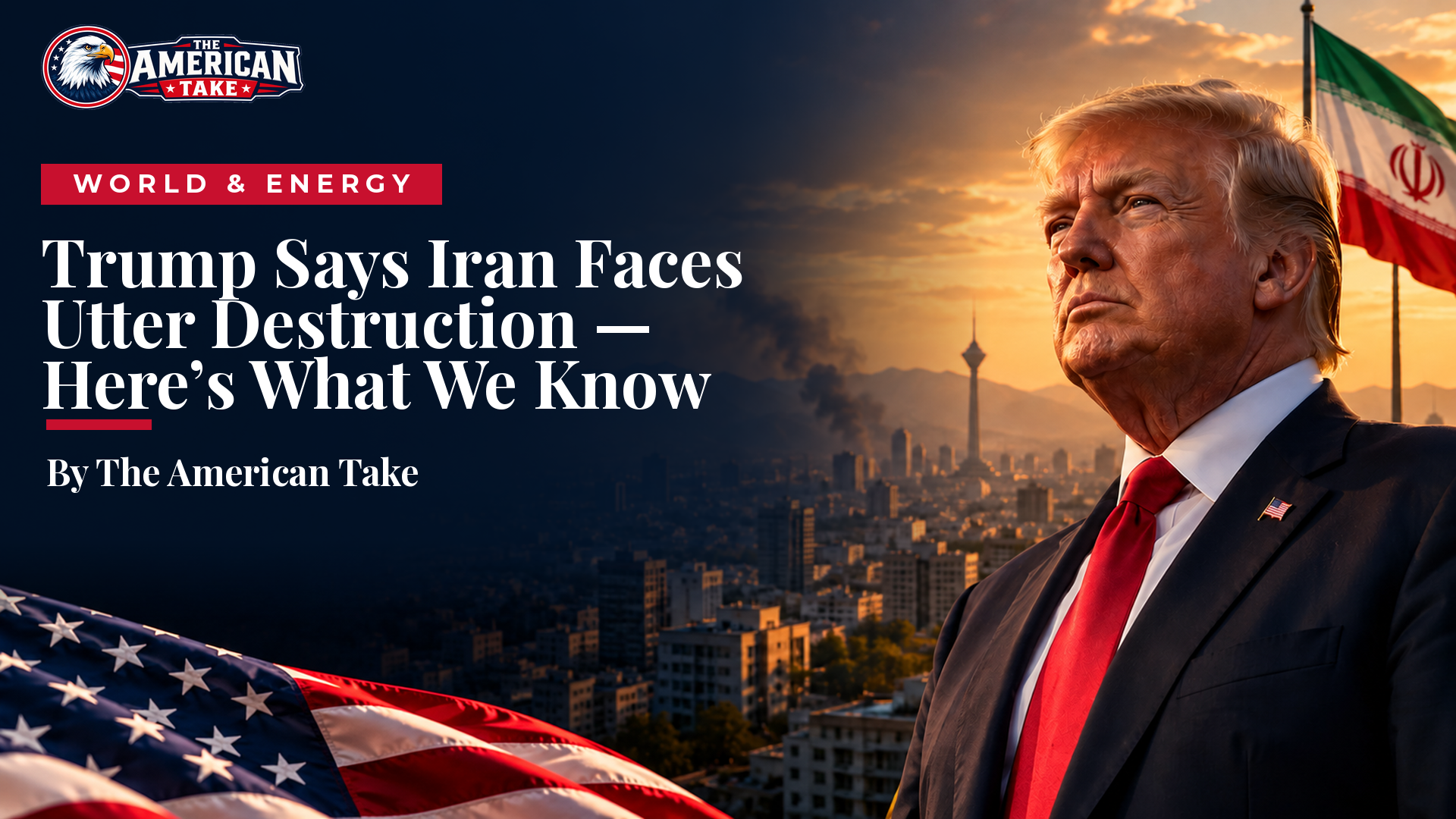
President Donald Trump is publicly weighing a choice among a negotiated agreement with Iran, tighter economic pressure and a much larger military strike. “Utter destruction” is our characterization of that warning, not a verbatim Trump quotation or an independent prediction that Iran is about to be destroyed.
In a Fox News interview reported Sunday, Trump described three possible paths and said “very big things” could happen. Asked about military action, he used the stark question, “When do I blow the entire nation up?” and added that Iran should “behave.” Those words were Trump’s rhetoric about a possible future decision. They do not establish that a new strike has been ordered, that a timetable exists or that the destruction of Iran is inevitable.
Reuters reported that Trump paired the threat with a diplomatic opening. He said he was willing to meet Iranian President Masoud Pezeshkian during the United Nations General Assembly in New York. That matters because the public message is not simply a declaration of imminent attack: the administration is signaling coercion while leaving room for talks.
What has actually happened
The warning comes during an already active regional conflict. U.S. and Israeli strikes against Iran began in February, and the fighting has disrupted energy shipments and commercial traffic through the Strait of Hormuz and the Bab el-Mandeb. Iran and Iran-aligned forces have also threatened or attacked U.S. partners and interests in the region. The latest escalation includes attacks by Yemen’s Houthi movement against Saudi targets, including a missile directed toward Riyadh, according to regional reporting.
The United States has continued military and economic pressure. Reuters reported that Washington has enforced a naval blockade affecting Iran’s oil trade, while the Treasury Department has imposed additional sanctions. Those measures can reduce Tehran’s revenue and restrict commerce, but they do not by themselves produce a guaranteed political outcome.
Iranian officials, meanwhile, have warned that additional attacks would bring retaliation against U.S. forces and regional allies. Iran says it has military options it has not yet used. Those are official Iranian claims and warnings, not independently verified proof of a particular capability or attack plan.
The diplomatic option remains open
Iran has also communicated conditions for renewed negotiations, including an end to attacks, changes to restrictions on its trade and the release of frozen funds. The sides remain far apart, and earlier ceasefire efforts have not produced a durable settlement. Still, the existence of stated conditions and Trump’s willingness to meet Pezeshkian show that diplomacy has not been formally removed from the table.
The economic route is similarly uncertain. Sanctions and interrupted oil exports can deepen pressure on Iran’s government and economy, but they can also affect global energy markets and civilian life. Oil and shipping risks have already become part of the wider consequences of the conflict. Economic pressure may be intended to force concessions; whether it will do so is not yet known.
What could come next
Trump’s public framing leaves three broad possibilities: a deal, a prolonged campaign of economic isolation, or a larger military operation. A fourth practical possibility is continued pressure without a decisive choice, especially while U.N. diplomacy develops and regional governments assess their own security.
The clearest fact is that the president has deliberately raised the stakes. The equally important fact is that he has not publicly announced a final decision. Any report that treats his warning as a completed order would go beyond the available evidence.
For Americans, U.S. personnel in the region and countries near Iran, the difference is consequential. A negotiated settlement, continued sanctions and an expanded strike carry very different military, economic and humanitarian risks. Trump has made the threat unmistakable. What remains unknown is which option he will choose, when he will choose it and whether current diplomacy can prevent another escalation.
 A product of The American Take · Essential context. Deeper insight. A clearer view ahead.
DIRECT. SIMPLE. YOUR INBOX.
One email. No middleman.
No algorithm deciding whether you hear from us. No social platform standing between you and The American Take. Just The Personal Daily Brief, sent directly.